
Last updated September 22, 2026
Level 1 sweep and inspection to the NFPA 211 annual standard - flue, crown, cap, and flashing checked and photographed
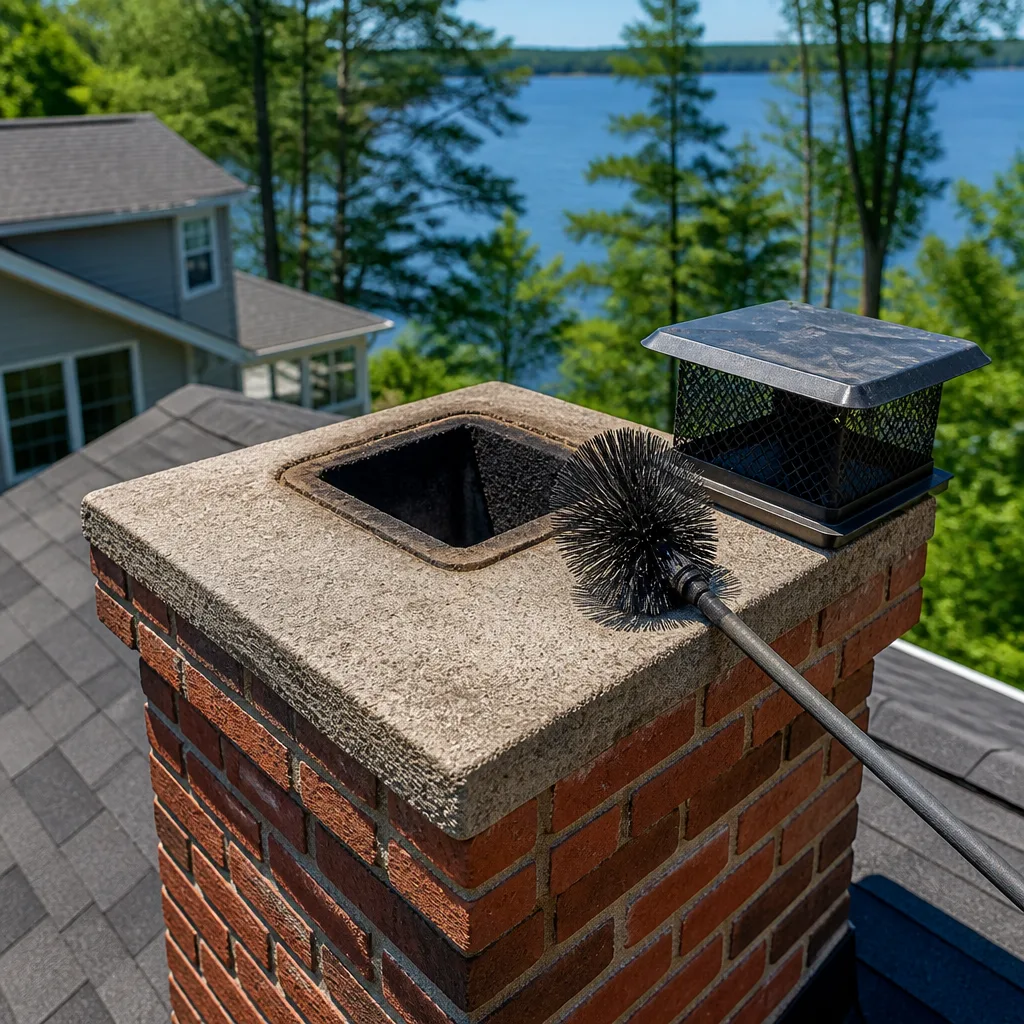
Chimney sweep logs do not sweep chimneys. They loosen some creosote - which then falls where a brush and vacuum still have to collect it.
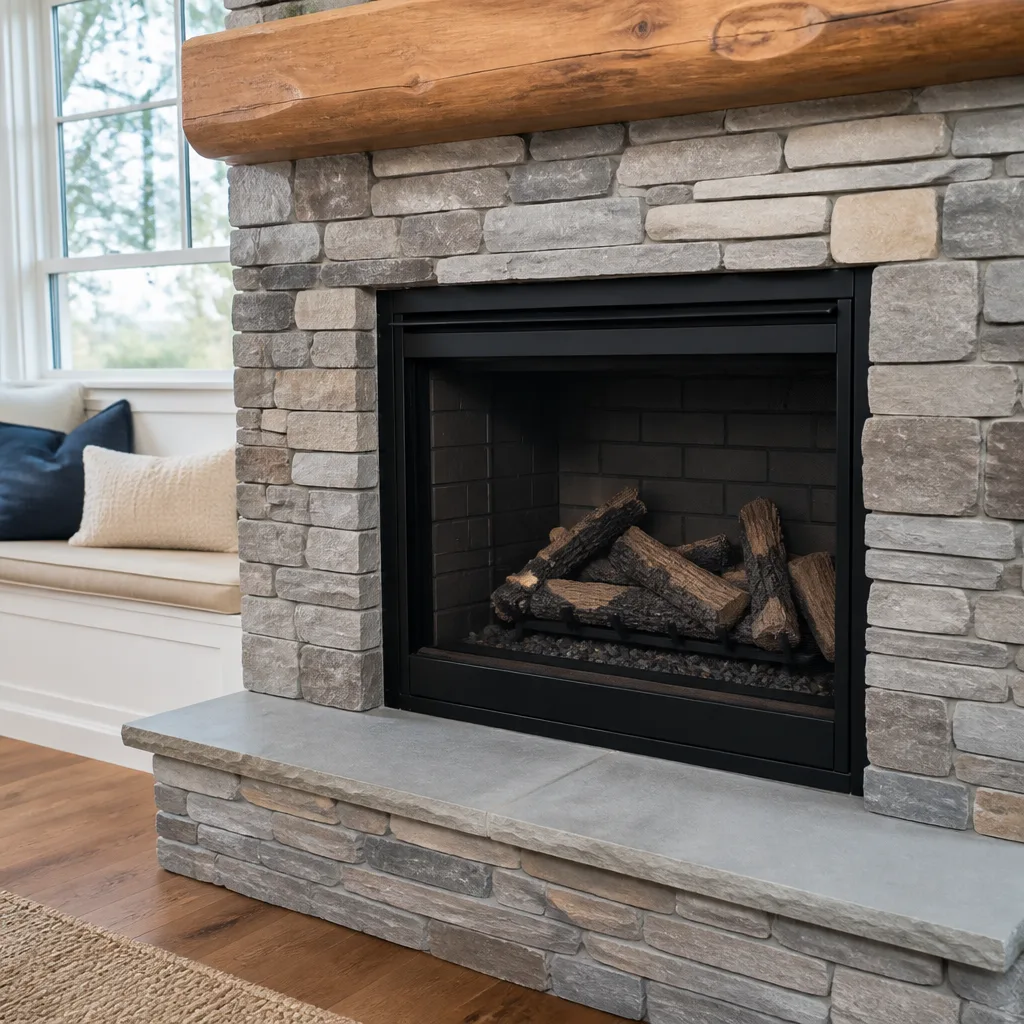
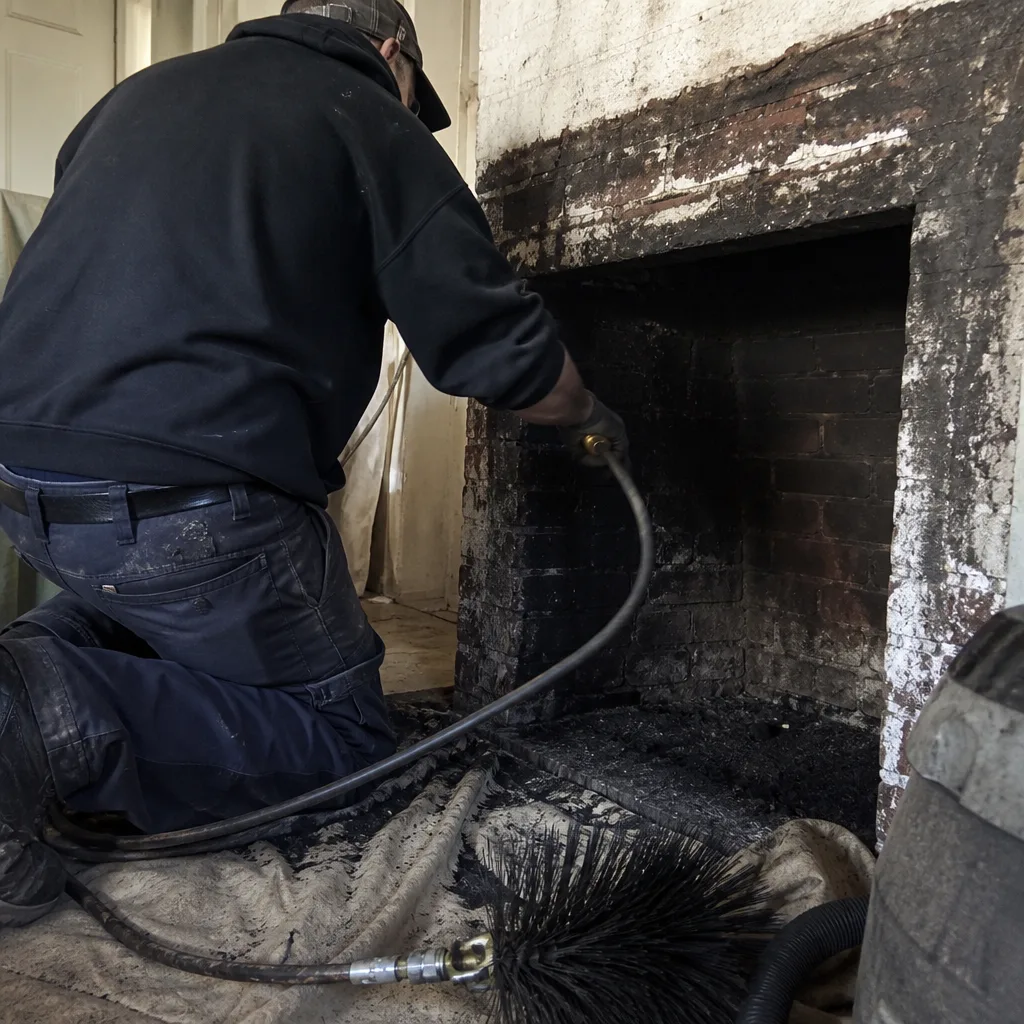 Before
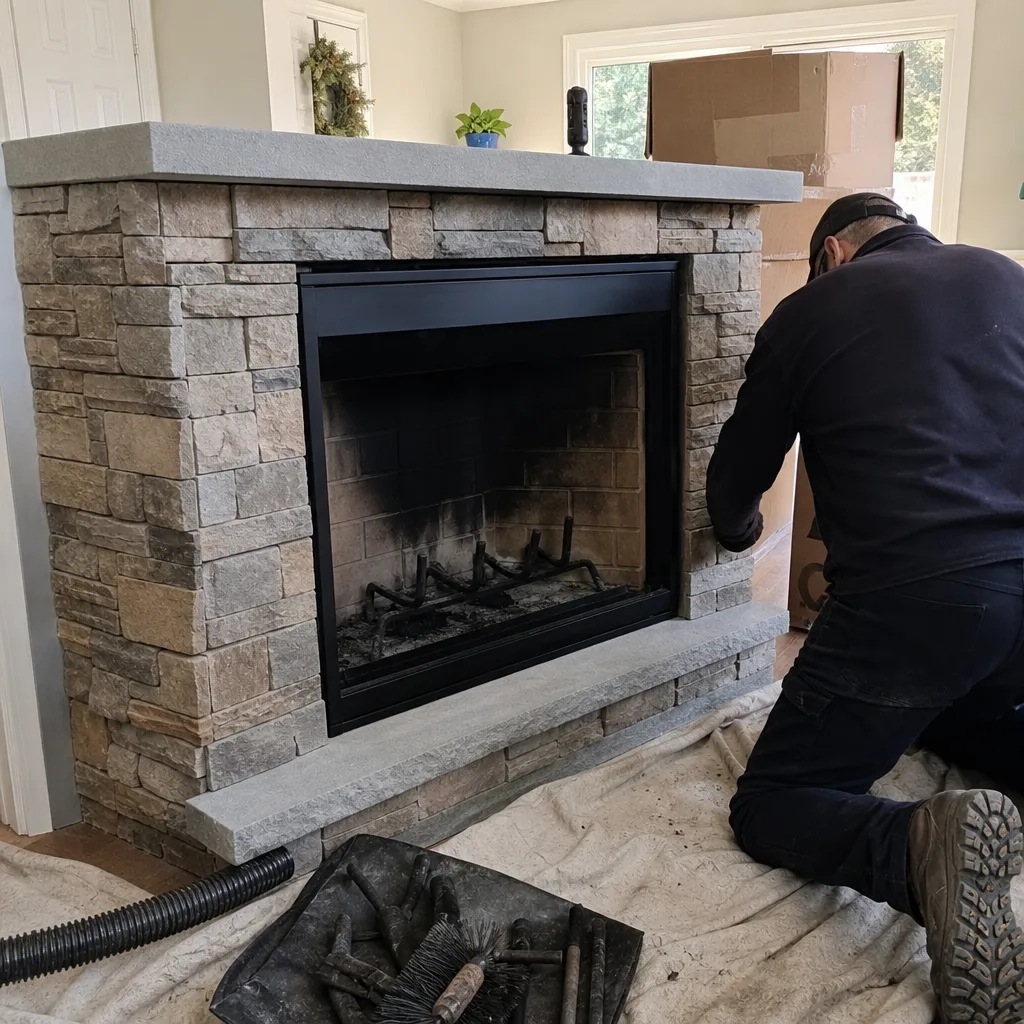 After
After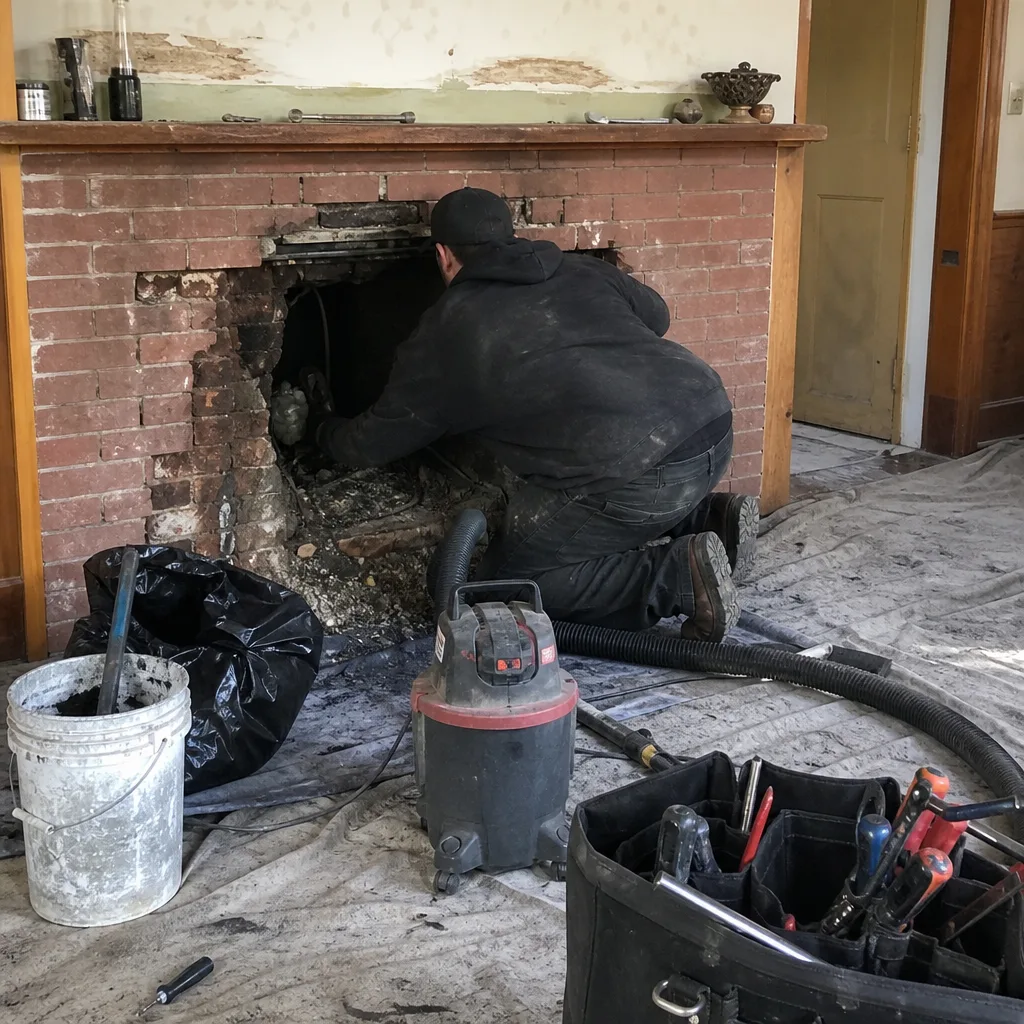 Before
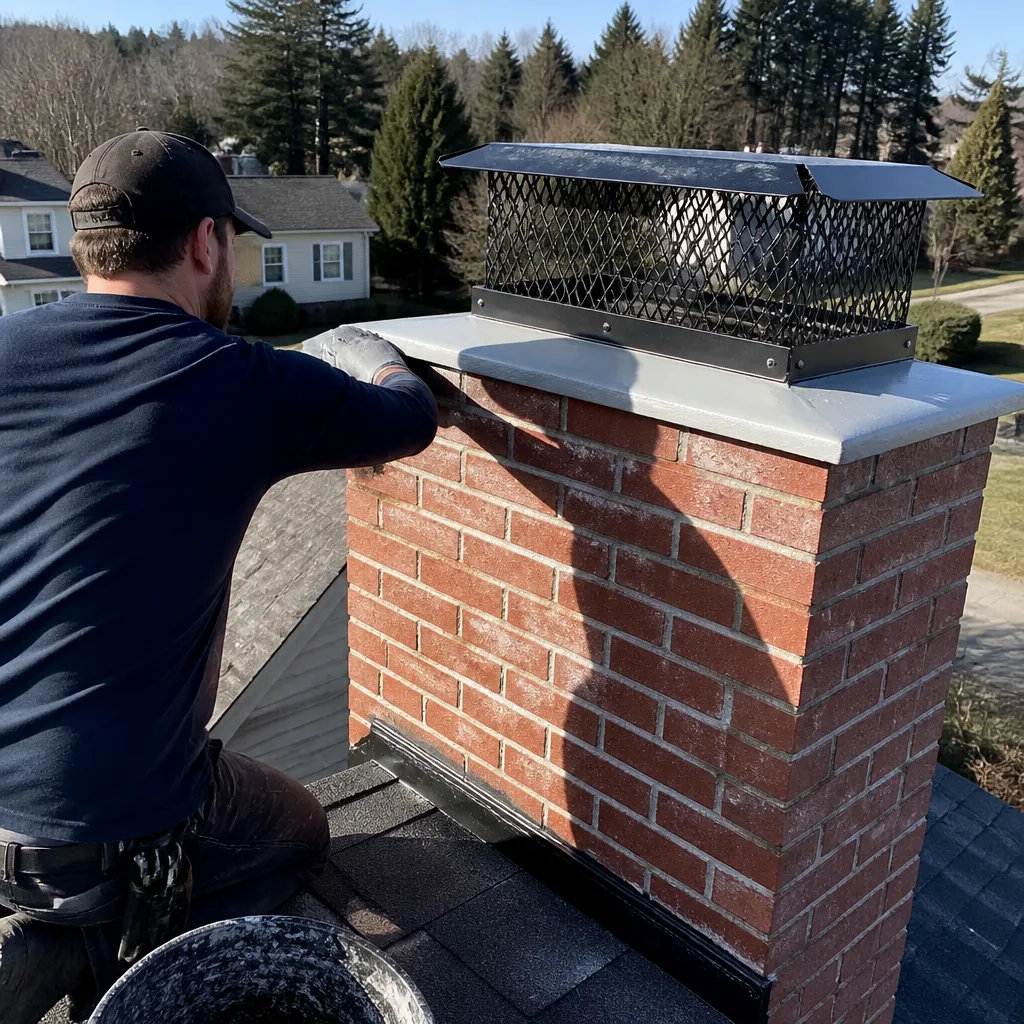 After
After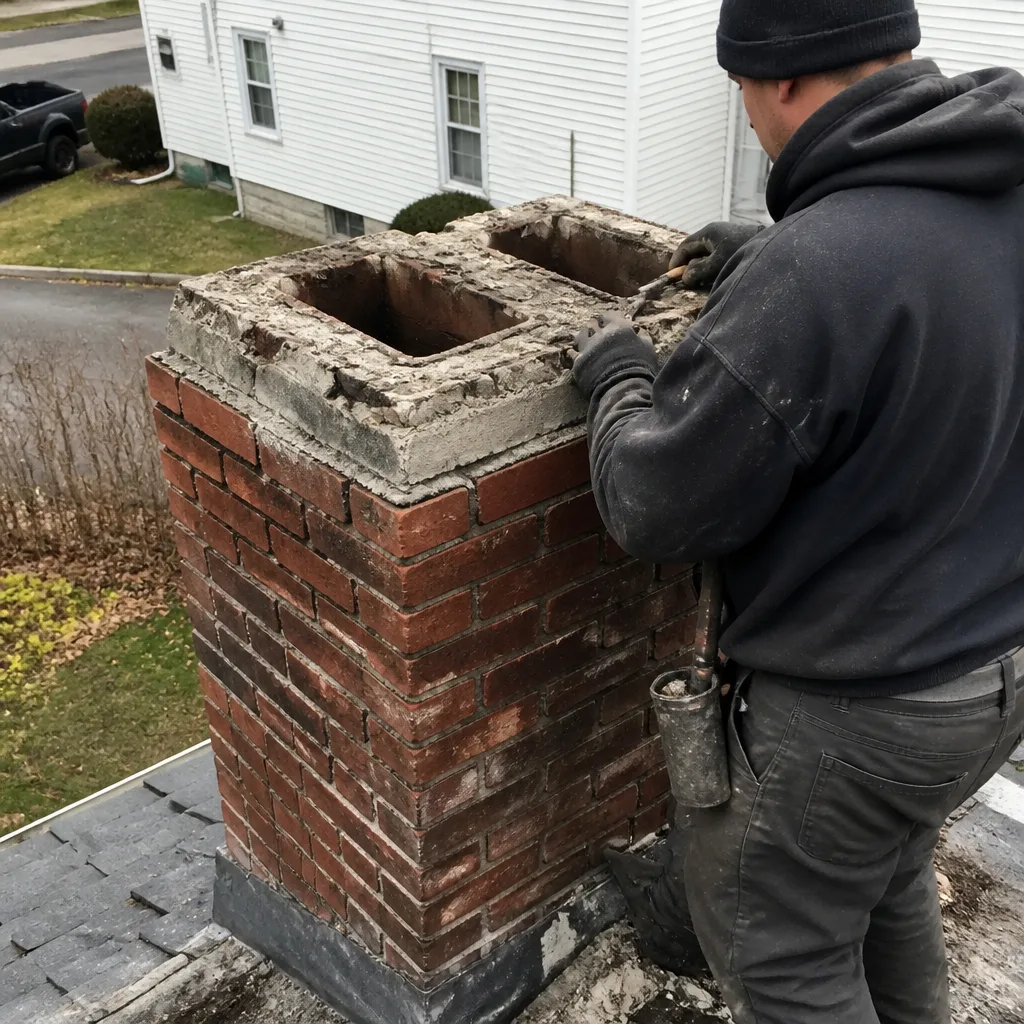 Before
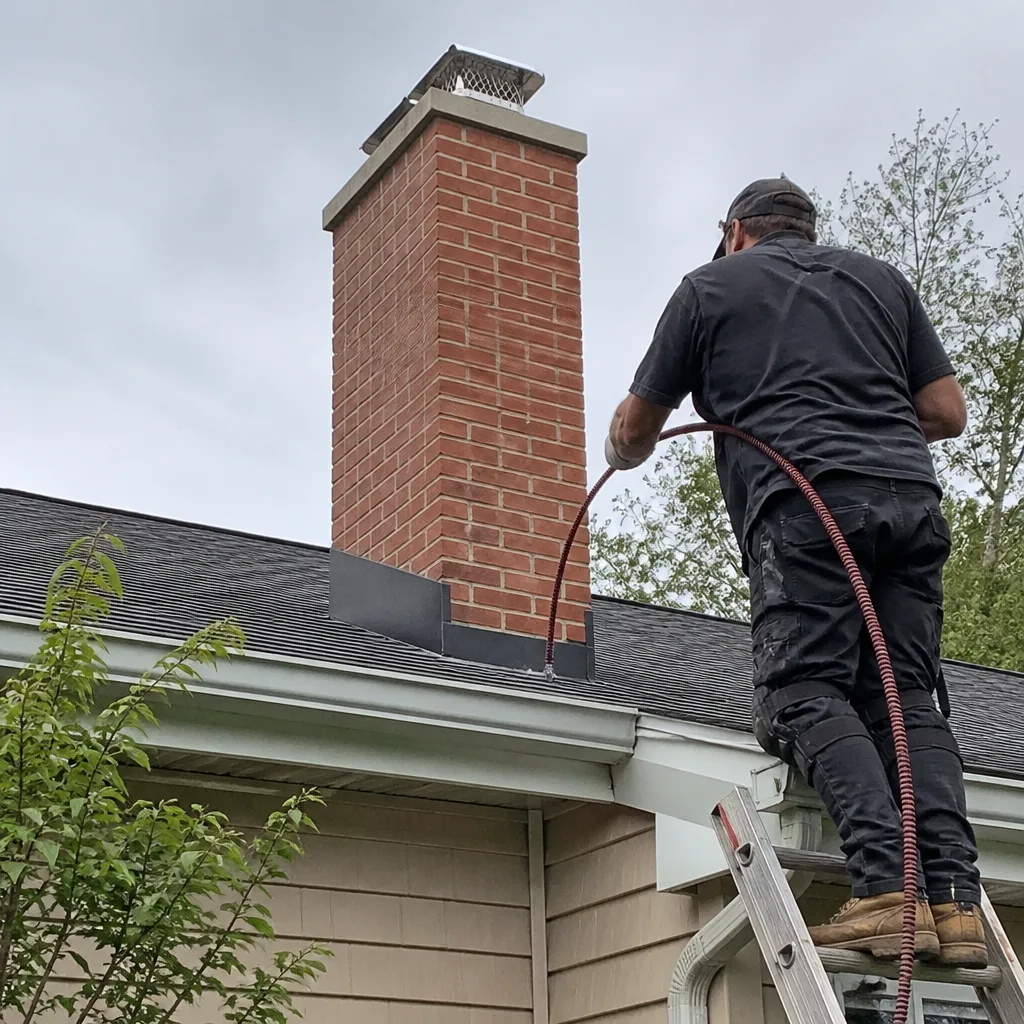 After
AfterChimney Cleaning Permits, Codes & Inspections in MA: What You Need to Know
A chimney liner replacement completed without a Worcester building permit is a latent defect that will surface at your next home sale. Buyers’ inspectors flag unpermitted work, and the seller - not the contractor - is typically responsible for bringing it into compliance. In our experience across more than 38,000 chimney inspections since 2009, we’ve seen Worcester homeowners surprised by permit requirements that their previous sweep never mentioned, often because that sweep wasn’t performing work that triggered code oversight in the first place. This guide maps exactly which chimney services require permits under Massachusetts law, which codes apply, and what documentation proves compliance when your contractor is no longer in business.
Quick Answer
Chimney cleaning and sweeping alone do not require permits in Worcester or anywhere in Massachusetts, as explained in our Complete Guide to Chimney Cleaning in Worcester. However, liner replacements, firebox rebuilds, chimney extensions, and structural repairs trigger building permit requirements under 780 CMR (Massachusetts State Building Code). NFPA 211 sets the national safety standard that Massachusetts adopts by reference, but state code adds specific requirements for documentation, inspection timing, and contractor licensing that exceed the national standard. Homeowners should request a stamped permit card, inspection sign-off, and photo documentation for any permitted work to protect their insurance coverage and property value.
Table of Contents
- Cleaning vs. Repairs: What Triggers a Permit
- How NFPA 211 Intersects with Massachusetts State Code
- The Worcester ISD Permit Process for Chimney Work
- How Insurers Use Permit Records in Fire Claims
- What Documentation to Request from Your Contractor
- Common Mistakes to Avoid
- When to Call a Professional
- Frequently Asked Questions
 Before
 After
AfterCleaning vs. Repairs: What Triggers a Permit
Massachusetts draws a bright line between maintenance and alteration. Understanding where your project falls determines whether you’re looking at a same-day service call or a multi-week permit process.
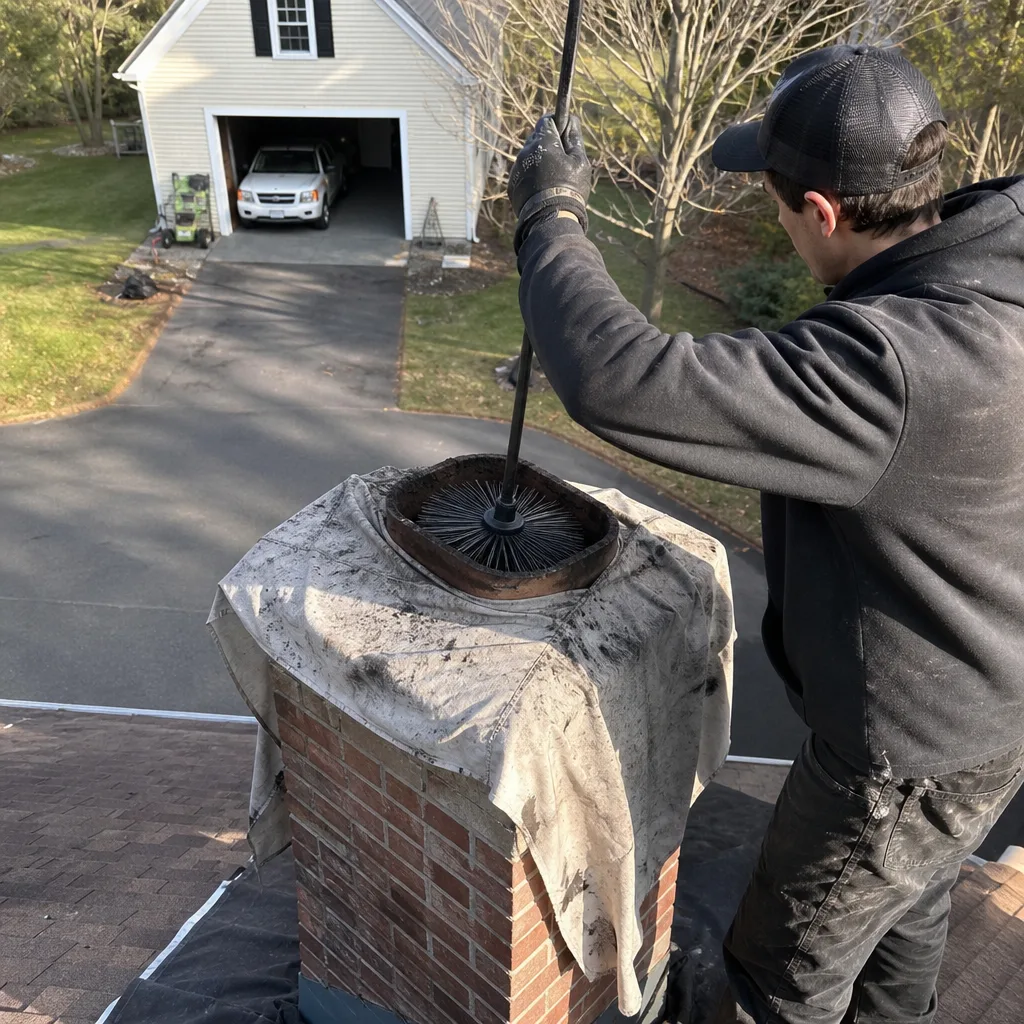
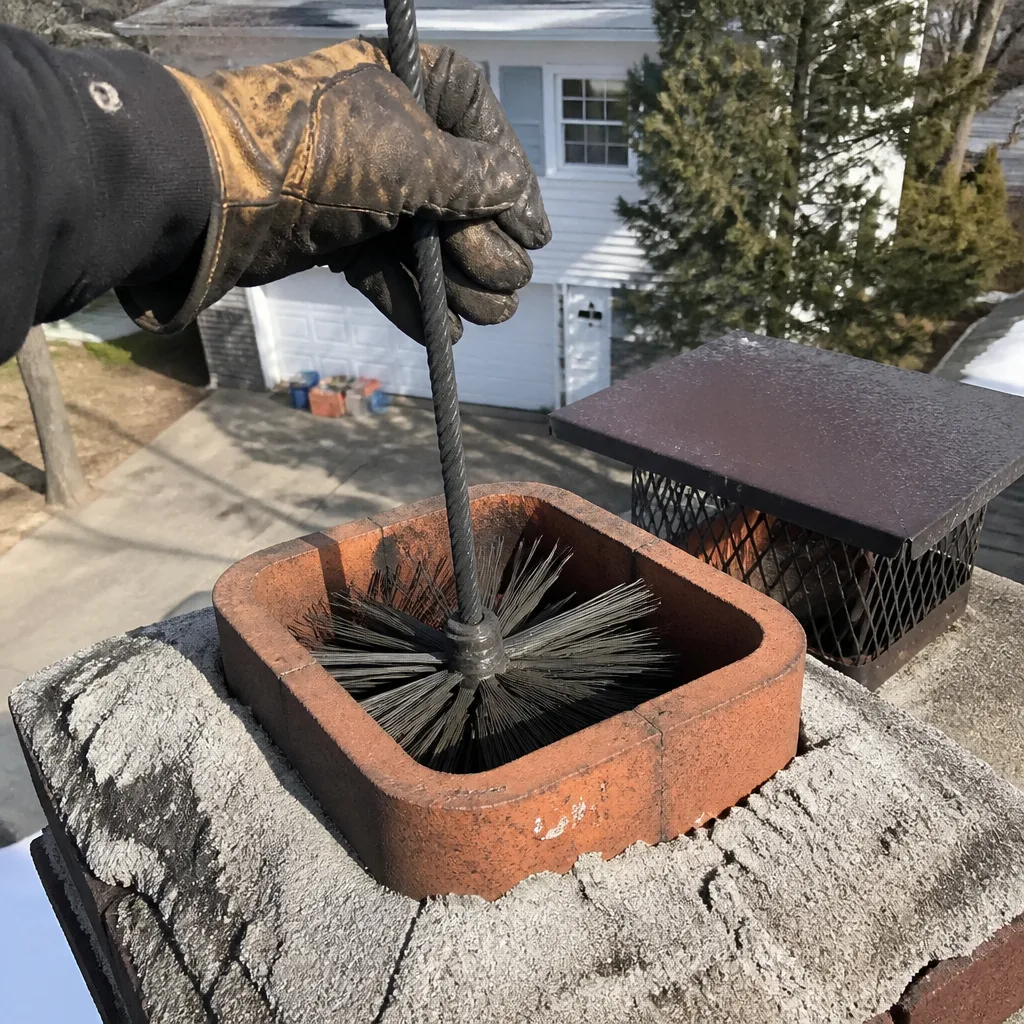
Chimney cleaning and sweeping - the removal of soot, creosote, and debris from a functioning flue - is classified as routine maintenance. No permit is required in Worcester, Boston, Springfield, or any Massachusetts jurisdiction. This includes standard sweep service with a rotary brush, vacuuming of the smoke chamber, and basic firebox debris removal. We perform this work under Chimney Cleaning & Sweep in Worcester without permit involvement.
Work that triggers a building permit includes:
- Flue liner replacement or relining (stainless steel, aluminum, or cast-in-place)
- Firebox reconstruction or refractory panel replacement exceeding 50% of surface area
- Chimney height extension or reduction
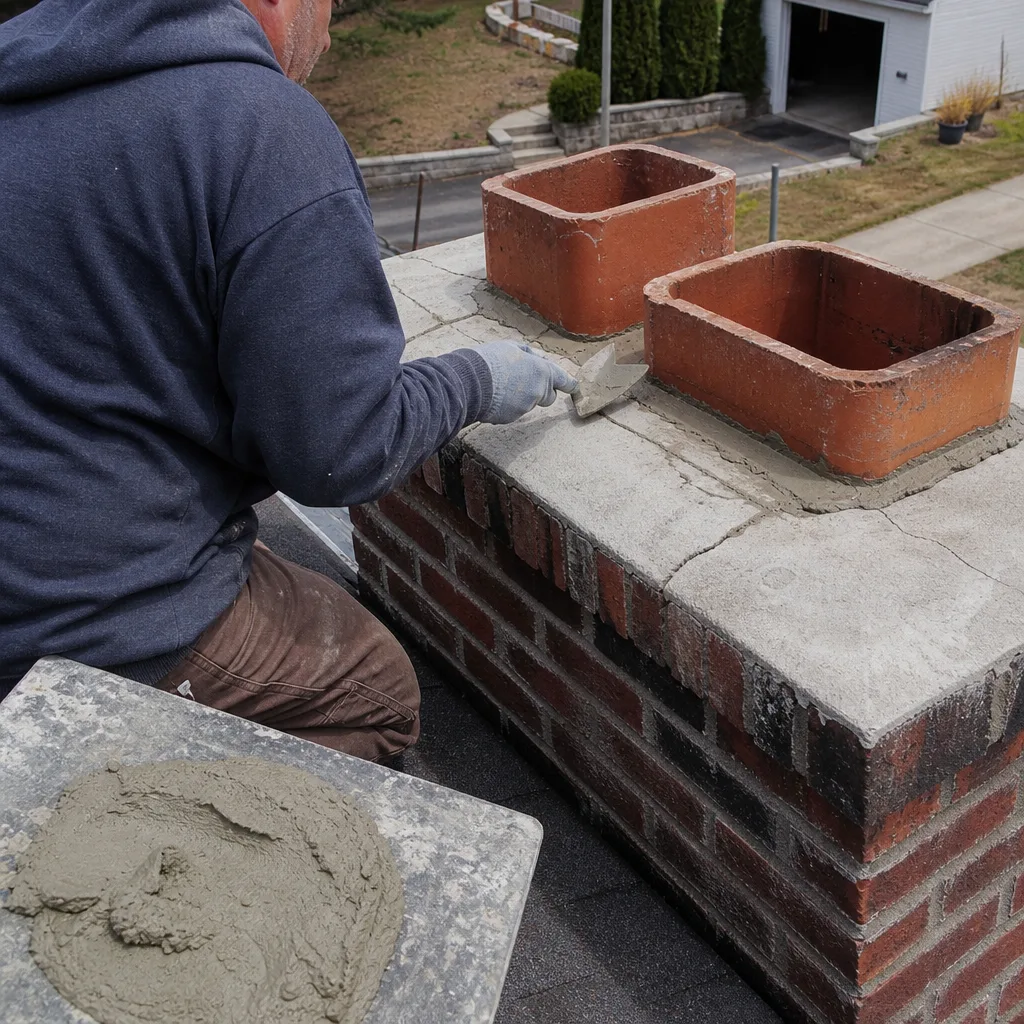
- Structural repairs to the chimney breast, crown, or exterior masonry
- Installation of a new chimney cap with structural modification to the flue termination
- Conversion from one fuel type to another (wood to gas, oil to pellet)
- Installation of a new insert or hearth stove requiring flue connection modification
The distinction matters because unpermitted liner work is increasingly flagged during real estate transactions in Worcester County. We’ve inspected homes in Shrewsbury Street corridor and Tatnuck where sellers faced $3,000-$8,000 in retroactive compliance costs because a previous owner had a liner installed without pulling the required Worcester ISD permit. The work itself was competent - the documentation was absent.
Massachusetts 780 CMR 110.R5 specifically requires permits for “repair or replacement of chimney liners” because the liner is classified as a building component integral to fire safety. This surprises homeowners who assume liner replacement is maintenance like a furnace filter change. It is not. The liner is your chimney’s primary fire barrier; its installation affects combustion gas venting, clearances to combustibles, and structural fire rating.
For Fireplace Services in Worcester involving insert installation or firebox modification, the permit requirement is non-negotiable. We’ve seen homeowners attempt to self-install inserts purchased from big-box retailers, only to have their homeowner’s insurance carrier deny coverage after a malfunction because no permit or inspection record existed. The insert sits in the fireplace, but the connection to the flue is alteration work under code.
How NFPA 211 Intersects with Massachusetts State Code
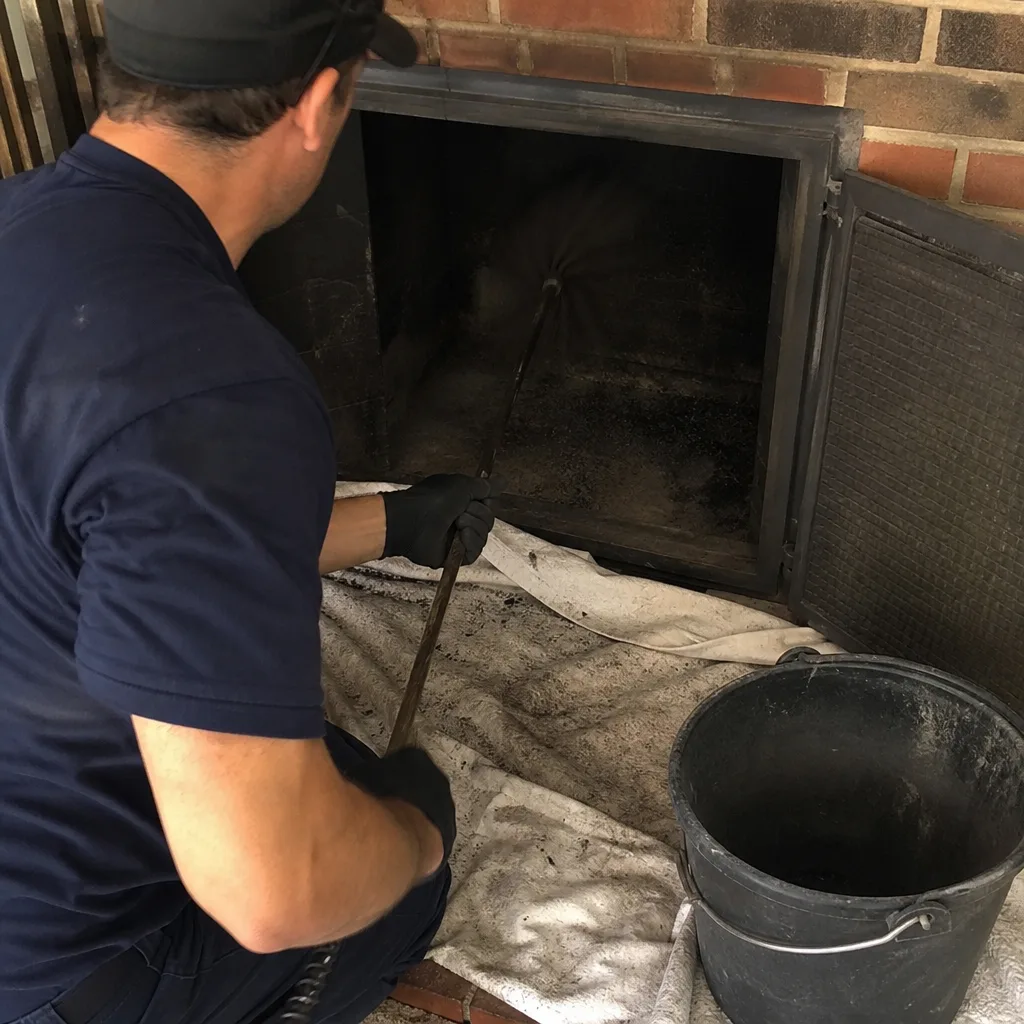
NFPA 211, the National Fire Protection Association’s Standard for Chimneys, Fireplaces, Vents, and Solid Fuel-Burning Appliances, is the document most chimney professionals reference. Massachusetts adopts NFPA 211 by reference in 780 CMR, but with modifications that create a stricter compliance environment than many other states.
Where the standards overlap:
- Annual inspection requirement for chimney systems in active use
- Three levels of inspection (Level 1, 2, 3) with defined scopes
- Clearance requirements between chimneys and combustible materials
- Prohibitions on connecting solid-fuel appliances to chimney systems serving other fuel types
Where Massachusetts code is stricter:
Inspection documentation. NFPA 211 recommends but does not mandate written documentation of inspection findings. Massachusetts 780 CMR requires that permitted work be documented with inspection sign-off by the local building official. Worcester ISD maintains these records permanently, creating a paper trail that survives contractor business closures.
Contractor licensing. NFPA 211 is a safety standard, not a licensing regime. Massachusetts requires anyone performing chimney work that triggers a permit to be licensed by the Massachusetts Board of Building Regulations and Standards (BBRS) or to work under a construction supervisor license (CSL) holder. We’ve encountered out-of-state sweeps performing liner installations in Worcester without Massachusetts licensure - work that appears competent but creates permit and insurance complications.
Liner material specifications. While NFPA 211 permits certain aluminum liners for gas appliances, Massachusetts has additional restrictions based on appliance type and venting temperature. We source stainless steel liners through our Haven buying network from DuraFlex and Olympia Chimney specifically because their products carry the UL listings that Massachusetts inspectors recognize without question.
Carbon monoxide detection. Massachusetts requires hardwired CO detectors with battery backup in all residences with combustion appliances, exceeding NFPA 211’s general recommendations. During Chimney Repair in Worcester, we routinely find that liner failures or blockages have been masked by functioning CO detectors - the safety device worked, but the underlying venting deficiency remained unaddressed.
In practice, Worcester building inspectors cite both NFPA 211 and 780 CMR during chimney inspections. A liner installation might meet NFPA 211’s dimensional requirements but fail 780 CMR’s documentation or licensing requirements. Both standards must be satisfied for legal compliance.
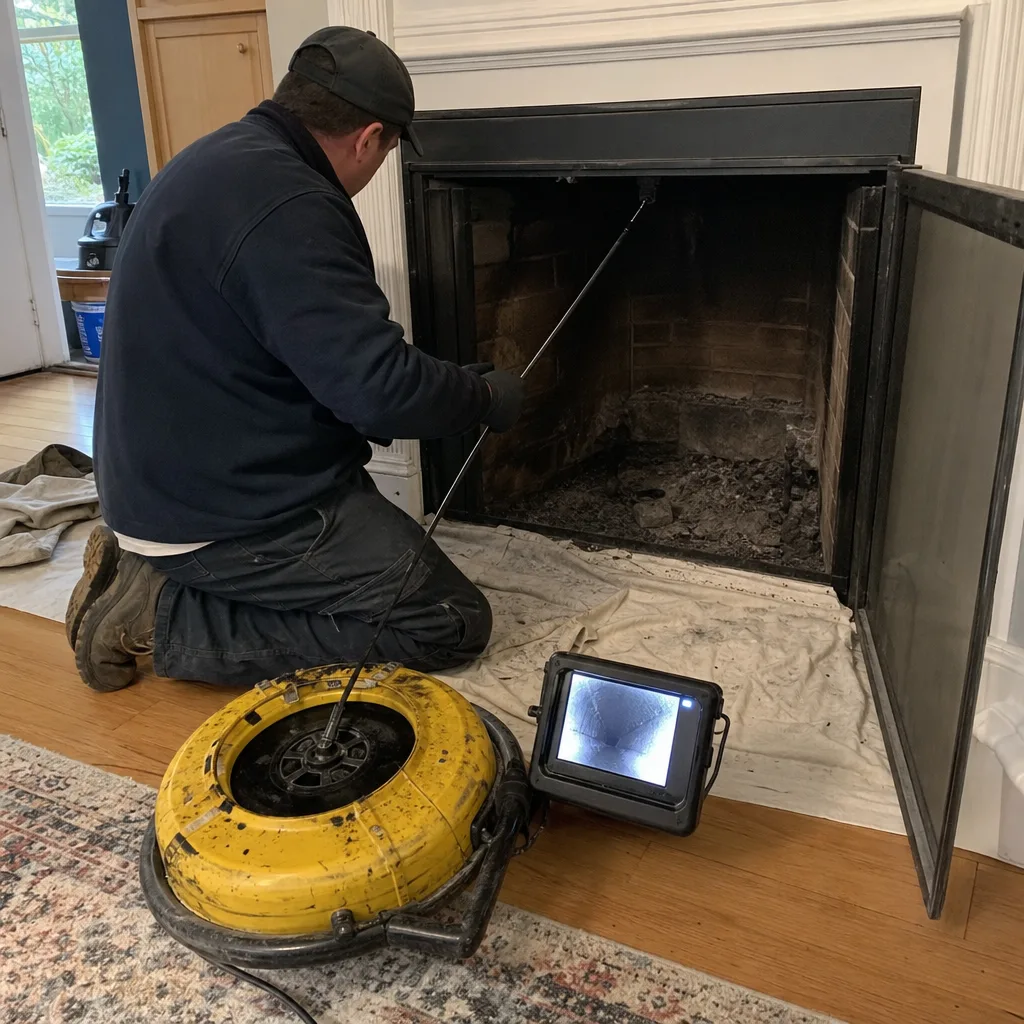
Our camera-scan inspection protocol, which we’ve performed on every job since 2009, aligns with NFPA 211 Level 2 requirements. But we also structure our documentation to satisfy Massachusetts’ stricter record-keeping expectations. Clause 4 of the Haven Standard requires a photo record on every job - not because NFPA 211 demands it, but because Massachusetts’ enforcement environment makes documentation a homeowner protection, not merely a professional courtesy.
The Worcester ISD Permit Process for Chimney Work
Worcester’s Inspectional Services Department (ISD) processes chimney permits through the building division at 25 Meade Street. The process is straightforward but not fast, and timeline expectations matter for homeowners planning winter burning season.
Step-by-step permit process for chimney liner replacement:
- Application submission. The licensed contractor or homeowner submits a building permit application with scope description, product specifications, and contractor license numbers. Worcester ISD accepts applications in person or through their online portal. The permit fee for chimney liner replacement typically runs $75-$150 depending on project valuation.
- Plan review. Worcester ISD reviews liner specifications for UL listing verification, proper sizing per appliance BTU output, and compliance with 780 CMR clearances. This takes 5-10 business days during normal periods, 15-20 business days during peak construction season (April-September). We’ve seen November liner replacement projects delayed into January because homeowners initiated permits in October without accounting for review backlog.
- Permit issuance. Upon approval, Worcester ISD issues a permit card with inspection scheduling instructions. The permit must be posted at the work site before any material installation begins.
- Rough inspection. For liner installations, Worcester ISD requires a rough inspection after liner placement but before final connection and sealing. This allows the inspector to verify proper sizing, support spacing, and clearance to combustibles. The inspector signs the permit card or notes corrections required.
- Final inspection. After completion, the contractor schedules final inspection. The inspector verifies proper termination, sealing, appliance connection, and operational testing. Passage results in a final sign-off on the permit card.
- Certificate of completion. Worcester ISD issues a certificate of completion or final approval letter, which should be retained with home records permanently.
Timeline realities in Worcester:
From application to final sign-off, expect 3-6 weeks for a standard liner replacement. Firebox rebuilds with structural component review can extend to 8 weeks. Worcester’s older housing stock - particularly in Main South and Green Island neighborhoods with pre-1950 masonry - often triggers additional review when inspectors identify adjacent structural concerns.
We coordinate permit applications as part of our project scope for Chimney Repair in Worcester work. Homeowners can self-permit, but we don’t recommend it. The technical specifications required - liner diameter calculations based on appliance input BTU, vent height tables from NFPA 211, clearance calculations to 780 CMR - are exactly the documentation errors that delay approvals when non-professionals prepare them.
Worcester ISD does not maintain a separate chimney specialist inspector. Building inspectors rotate through all permit types. This means your chimney inspection may be performed by an inspector whose recent experience has been deck framing or HVAC rough-ins. Detailed, organized documentation from the contractor smooths this variability. Our photo records and written scope sheets, prepared to Haven Standard specifications, give inspectors clear verification points regardless of their chimney-specific background.
How Insurers Use Permit Records in Fire Claims
Homeowner’s insurance policies contain a standard exclusion for losses resulting from “faulty, inadequate, or defective workmanship.” In chimney fire claims, insurers increasingly investigate whether permitted work was performed and properly inspected - not because the permit prevents fire, but because its absence suggests unlicensed or non-compliant installation that may have contributed to loss.
Three scenarios we encounter:
- Clean permit record, proper inspection: Claim proceeds through standard adjustment. The insurer may still investigate cause, but permit compliance removes the workmanship exclusion as a barrier to coverage.
- Work performed, permit not pulled: Insurer invokes workmanship exclusion. Homeowner must prove installation met code despite absence of inspection. This requires expert testimony, often costing $2,000-$5,000, with no guarantee of success. We’ve assisted Worcester homeowners in West Tatnuck and Indian Lake East with documentation for these disputes - documentation we could provide because our work was permitted and inspected when we performed it.
- No record of who performed work: Worst case. Previous owner completed DIY or hired unrecorded labor. Insurer denies claim; homeowner has no recourse against absent contractor. In Massachusetts, the statute of limitations for construction defect claims is three years from completion - if you can identify the contractor.
Carbon monoxide claims follow similar patterns. A blocked or deteriorated liner causing CO infiltration may trigger medical payments coverage, but if the liner was recently replaced without permit, the insurer may argue defective installation contributed to the blockage pattern.
Our recommendation: for any chimney work beyond cleaning and sweep maintenance, request the permit number before work begins, verify it with Worcester ISD after completion, and retain the certificate with your home records. This costs nothing and creates a recoverable record that outlasts any contractor’s business lifespan.
The 365-Day Done Right Promise we offer on all work is backed by our permit compliance - we don’t perform work that triggers permit requirements without pulling the permit. This is not merely ethical practice; it’s risk management for our customers’ insurance continuity.
What Documentation to Request from Your Contractor
A contractor who performs permitted work and disappears creates the same documentation gap as one who never pulled the permit. Homeowners need records they can verify independently of the contractor’s continued operation.
Essential documents to request and retain:
- Stamped permit card or permit number - Verify with Worcester ISD online permit lookup or by calling (978) 307-8288
- Final inspection sign-off - The inspector’s signature or electronic approval confirming code compliance
- Written scope of work - Specific materials, dimensions, and procedures performed (Haven Standard Clause 1: “Have it in writing”)
- Photo or video record of completed work - Particularly liner interior, crown condition, and clearances (Haven Standard Clause 4)
- Product specifications and UL listings - For liners, caps, and repair materials; we provide DuraFlex or HeatShield specification sheets on request
- Warranty documentation - Manufacturer’s warranty on materials, contractor’s warranty on labor, with specific terms and exclusions
- Contractor license verification - Massachusetts CSL or BBRS license number, verifiable through state licensing portal
Red flags that documentation is inadequate:
A verbal warranty. A handwritten receipt without scope description. A permit “handled by” the contractor without your name on the application. Product descriptions like “stainless liner” without gauge, alloy specification, or manufacturer. These gaps don’t matter until they matter - typically during a home sale or insurance claim, when the contractor is unreachable and the burden falls on you.
Since 2009, we’ve maintained a digital archive of every job’s documentation, accessible to past customers regardless of how many years have passed. But we still urge homeowners to retain their own copies. Your file drawer doesn’t depend on our server continuity.
For Level Two Chimney Worcester home services, we deliver documentation in a folder at job completion: permit copies, inspection results, photo record on USB, written warranty, and product specifications. This is standard, not optional. Clause 4 of the Haven Standard requires it.
Common Mistakes to Avoid
- Assuming “chimney sweep” covers all services without permit distinction. Many Worcester homeowners hire a sweep for “a cleaning” and accept upsold liner work without realizing the permit requirement has changed. Ask explicitly: “Does this scope require a building permit?”
- Accepting a contractor’s claim that Worcester ISD “doesn’t enforce chimney permits.” Enforcement varies by inspector and complaint volume, but unpermitted work is a code violation regardless of detection frequency. Your home sale or insurance claim will enforce it eventually.
- Failing to verify the permit after completion. We’ve encountered cases where contractors claimed permits were “in process” that were never filed. Worcester ISD’s online permit lookup allows homeowner verification in two minutes.
- Discarding documentation after “the work looks fine.” Massachusetts requires disclosure of unpermitted work on property transfers. Your documentation is your defense against latent defect claims from future buyers.
- Hiring based on lowest price without license verification. Unlicensed contractors often price 15-30% below market by avoiding permit fees, insurance, and warranty reserves. The savings evaporate when compliance costs are later imposed.
- Confusing NFPA 211 inspection with code inspection. A Level 2 NFPA inspection documents condition; it does not certify code compliance for recent work. Only the local building inspector’s sign-off does that.
When to Call a Professional
Call a licensed chimney professional when your project scope exceeds routine cleaning, when you’re purchasing a home with undocumented chimney work, or when your insurer has requested compliance verification. In Worcester’s freeze-thaw climate, masonry deterioration accelerates when underlying liner or crown issues go unaddressed - but addressing them without proper permits creates larger problems than the deterioration itself.
Level Two Chimney Worcester offers free estimates in Worcester - call (978) 307-8288. We’ll assess your chimney’s condition, identify whether proposed work triggers permit requirements, and provide a written price before any work starts. If you have a competitor’s written estimate, our Free Second Opinion service reviews their scope and pricing against what your project actually requires. Every job we perform includes a camera-scan inspection and documented photo record under Haven Standard Clause 4, with permit coordination for all work requiring Worcester ISD oversight.
Frequently Asked Questions
No. Chimney cleaning and sweeping are classified as routine maintenance under 780 CMR and do not require permits in Worcester or any Massachusetts jurisdiction. Call (978) 307-8288 to schedule a sweep - estimates are free.
Chimney liner replacement in Worcester typically ranges from $2,800-$5,500 for a single-flue stainless steel installation, depending on flue height, diameter, appliance configuration, and whether masonry repairs are required simultaneously. This price includes permit coordination, rough and final inspections, and our 365-Day Done Right Promise. We provide a written price before work starts - never “call for a quote.”
A liner can be cleaned if it’s structurally intact with no cracks, gaps, or deterioration visible on camera inspection. We evaluate liner condition with NFPA 211 Level 2 camera scan and show you the footage. If the liner is cracked, separated, or deteriorated to the point that cleaning would expose combustible framing, replacement is required by code. Call (978) 307-8288 for an inspection and honest assessment of whether your liner can be safely maintained.
Annual sweeping is recommended for wood-burning systems in active use, per NFPA 211. Worcester’s cold winters and frequent freeze-thaw cycles accelerate creosote accumulation and masonry stress. Gas and oil systems should be inspected annually and cleaned as needed based on inspection findings. We document each inspection with photos so you can compare year-over-year condition.
Skipped maintenance leads to creosote buildup that increases chimney fire risk, liner deterioration that can expose combustible framing, and blockages that cause carbon monoxide backup - see our Chimney Cleaning Warning Signs for what to watch for. In Worcester, we’ve seen neglected chimneys in Burncoat and University Park require $8,000-$15,000 in rebuild costs that annual maintenance would have prevented. Insurance may deny claims for losses resulting from documented neglect.
Homeowners can self-permit in Worcester, but we don’t recommend it for technical work like liner replacement. The calculations for proper liner sizing, vent height, and clearance compliance require specialized knowledge. Errors in permit application delay approval and may result in inspection failures requiring costly rework. Our project pricing includes permit coordination.
Verify through the Massachusetts Board of Building Regulations and Standards online license lookup or by calling (978) 307-8288. Request the contractor’s Construction Supervisor License (CSL) number or Home Improvement Contractor (HIC) registration. Level Two Chimney Worcester technicians are background-checked, uniformed, and license-verified - we display license information on every page and provide it on request.
The Bottom Line
Chimney cleaning requires no permit. Chimney repairs and alterations do, and the distinction determines whether your home sale proceeds smoothly or stalls on inspection findings. Massachusetts code, through 780 CMR, adopts NFPA 211’s safety standards but adds stricter documentation, licensing, and inspection requirements that protect homeowners beyond the national minimum. Worcester ISD’s permit process takes 3-6 weeks for typical liner work - factor this into seasonal planning. Most importantly, obtain and retain documentation that proves compliance independently of your contractor’s future availability. The permit card in your file drawer outlasts every business card.
Written by Corrine Halstead, Owner at Level Two Chimney Worcester, serving Worcester since 2009.