
Last updated September 22, 2026
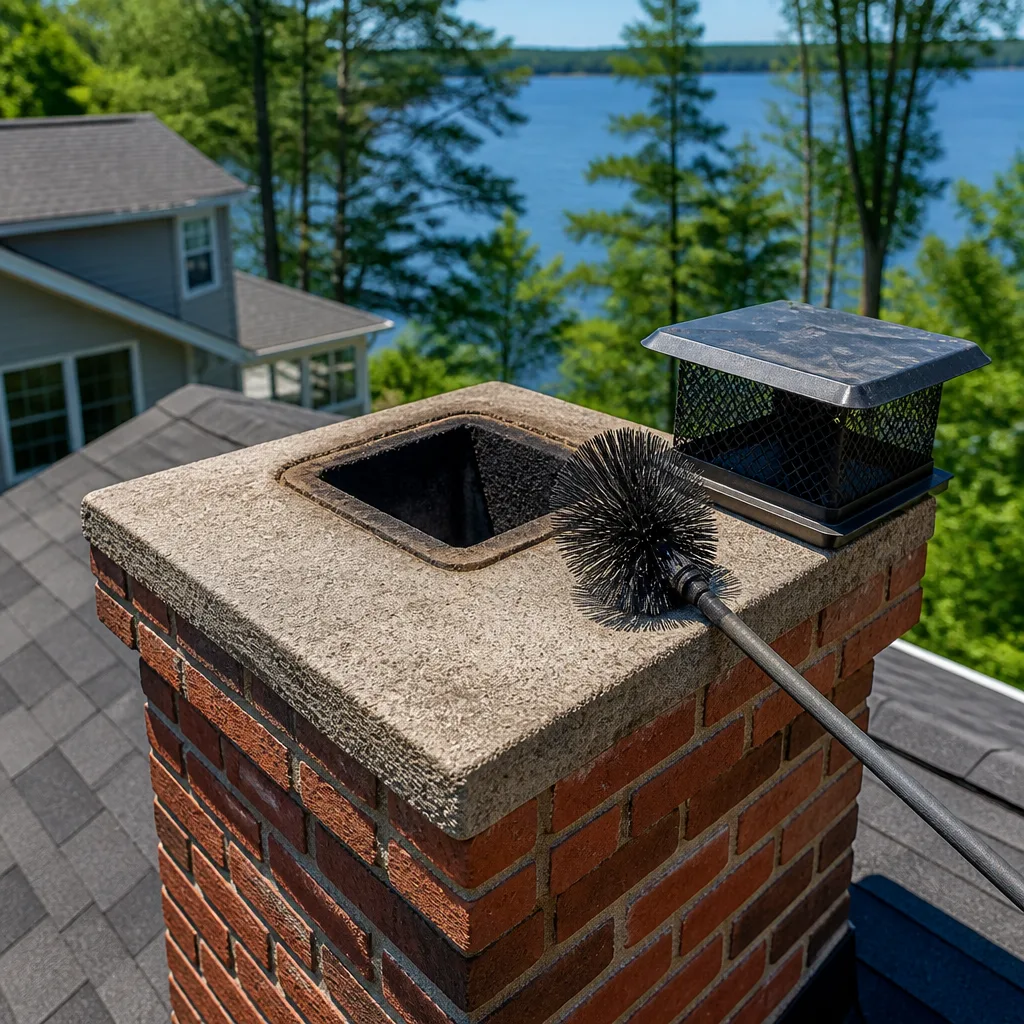
Level 1 sweep and inspection to the NFPA 211 annual standard - flue, crown, cap, and flashing checked and photographed
Chimney sweep logs do not sweep chimneys. They loosen some creosote - which then falls where a brush and vacuum still have to collect it.
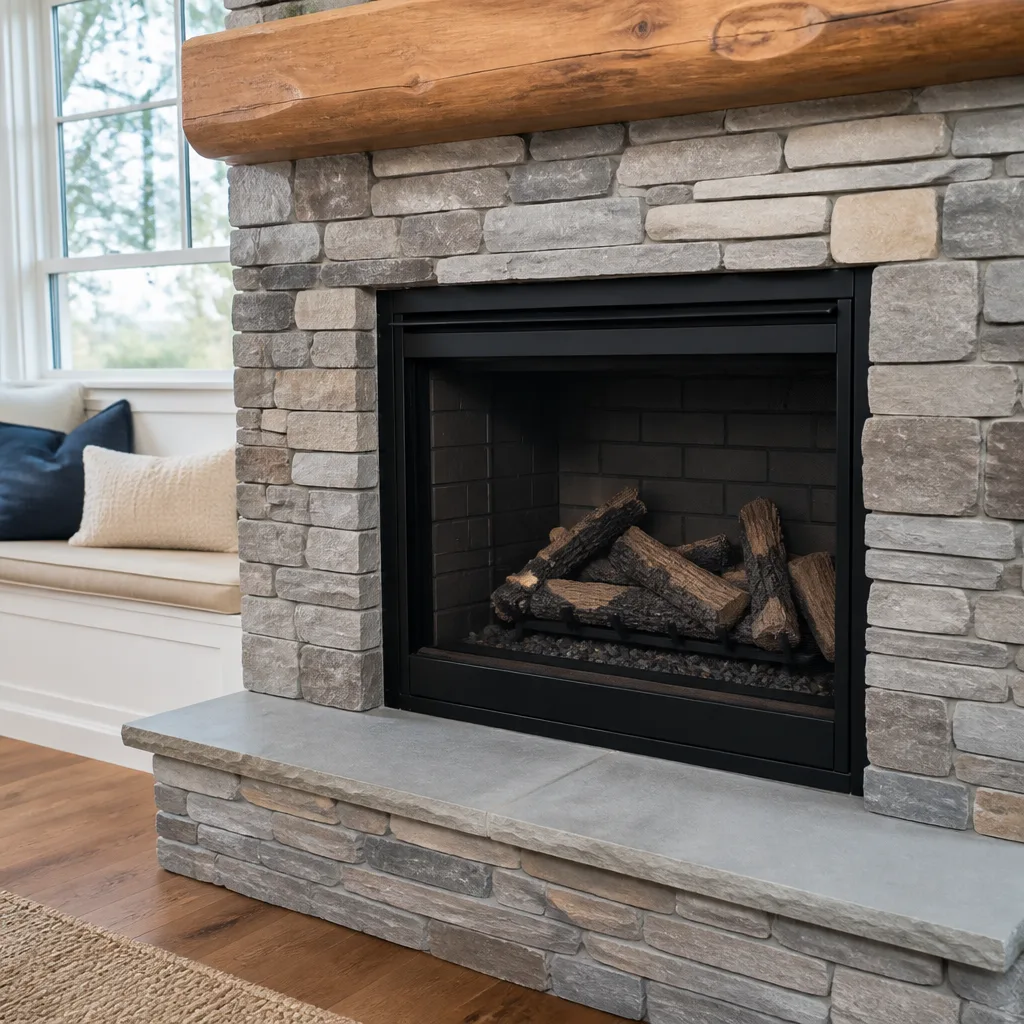
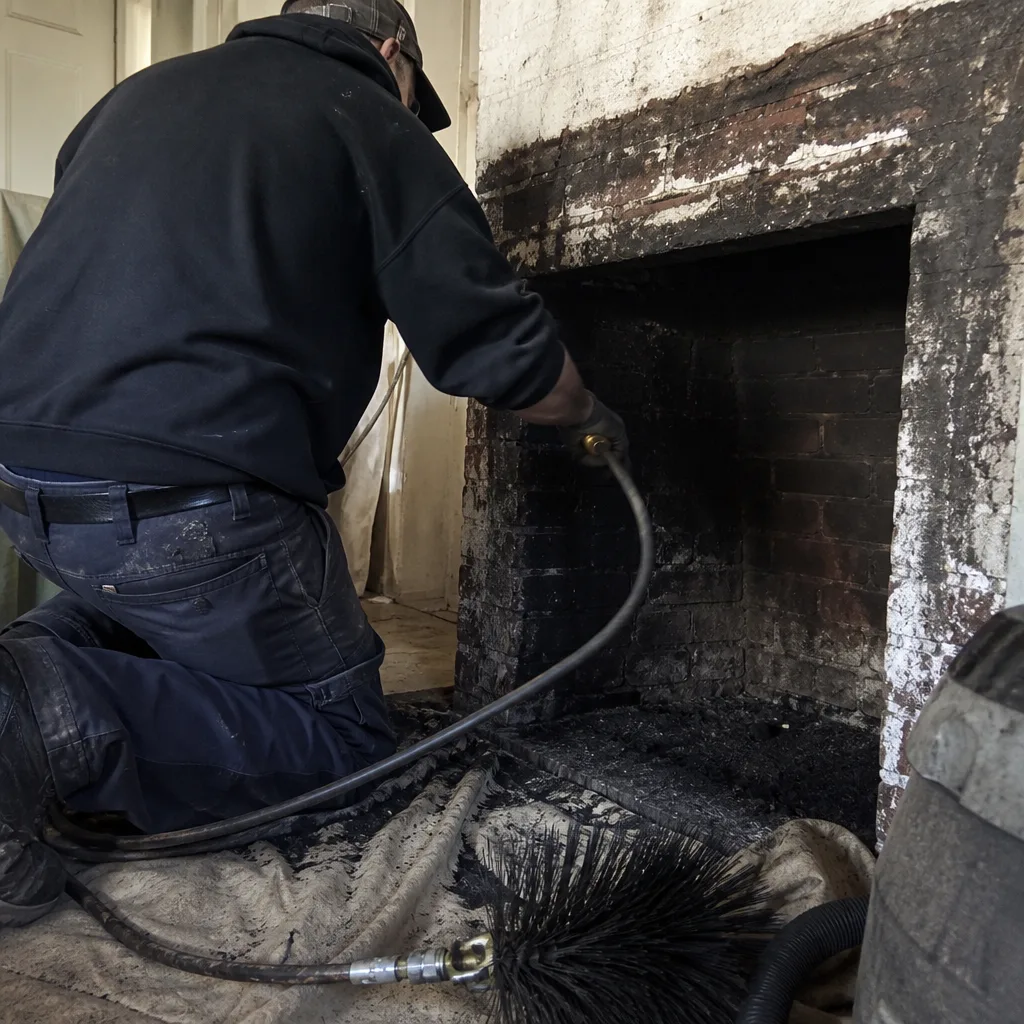 Before
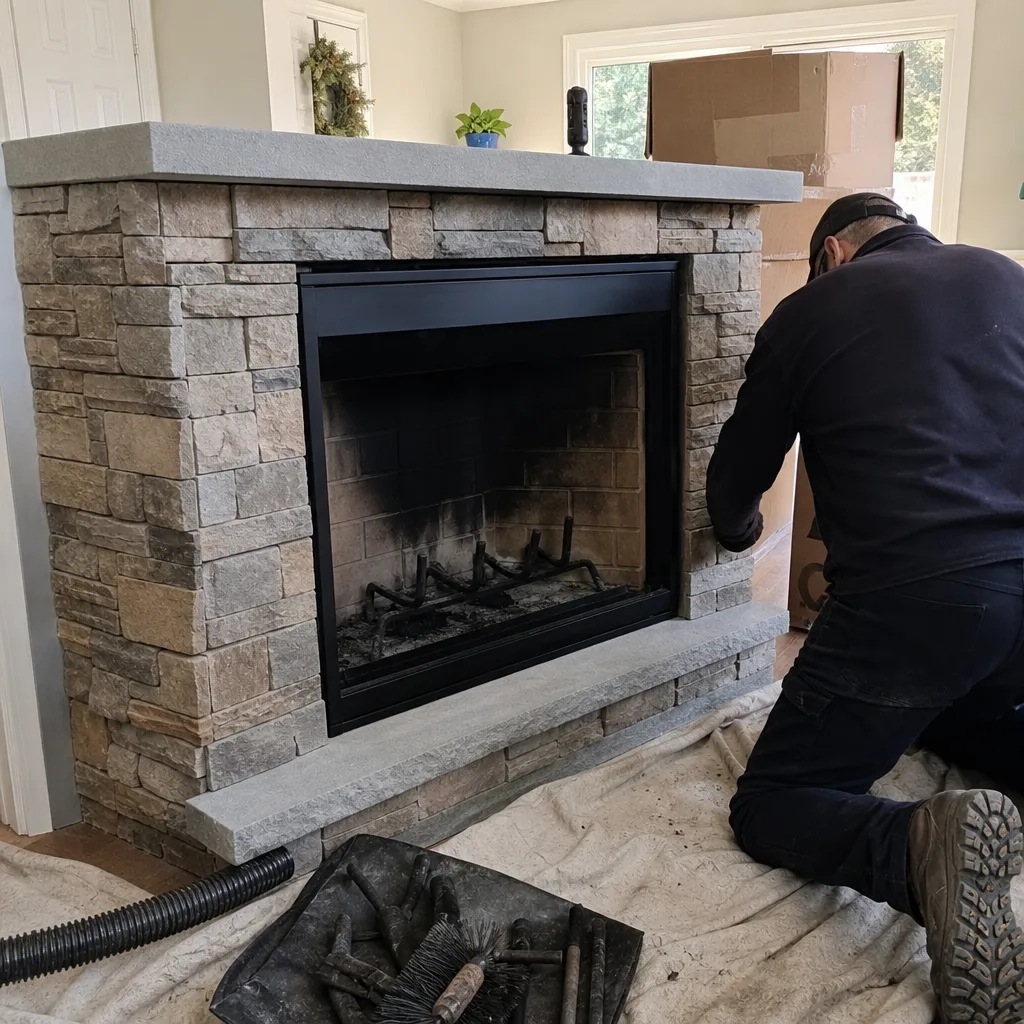 After
After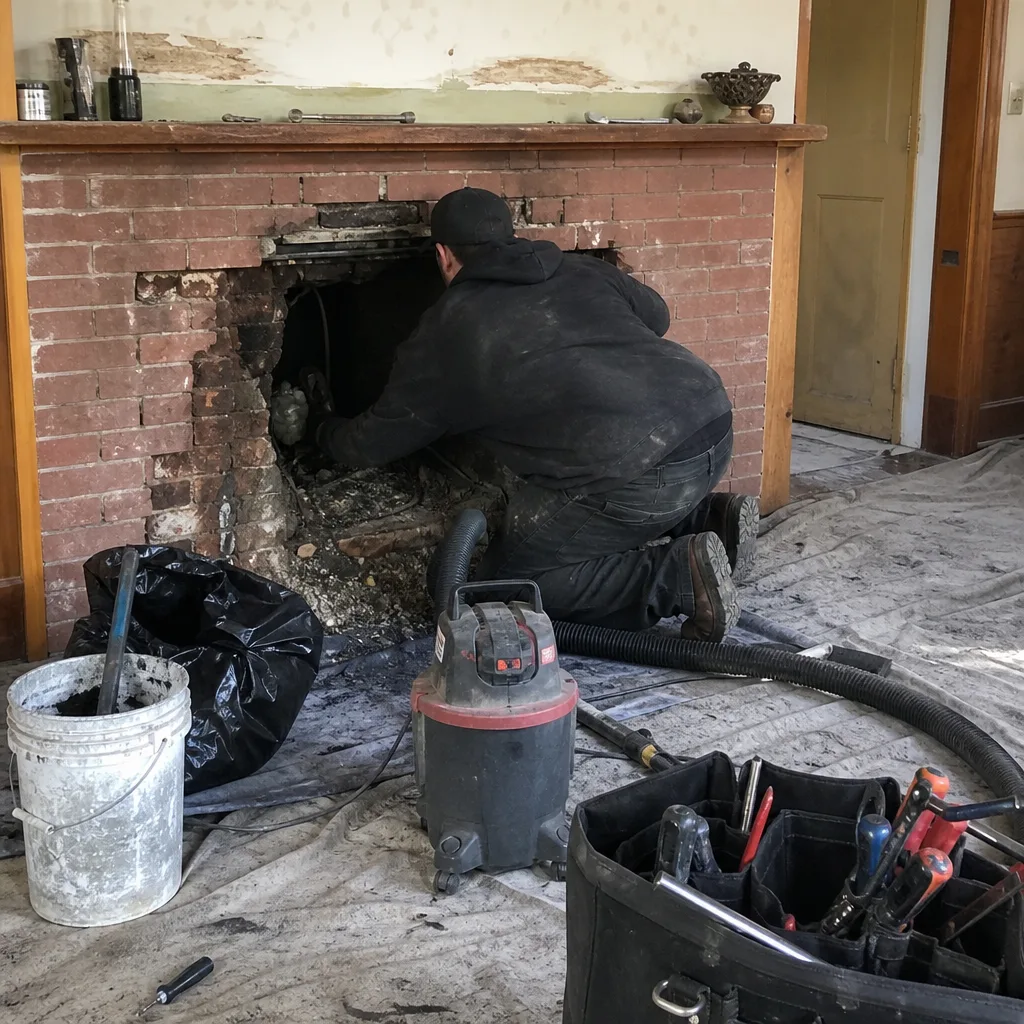 Before
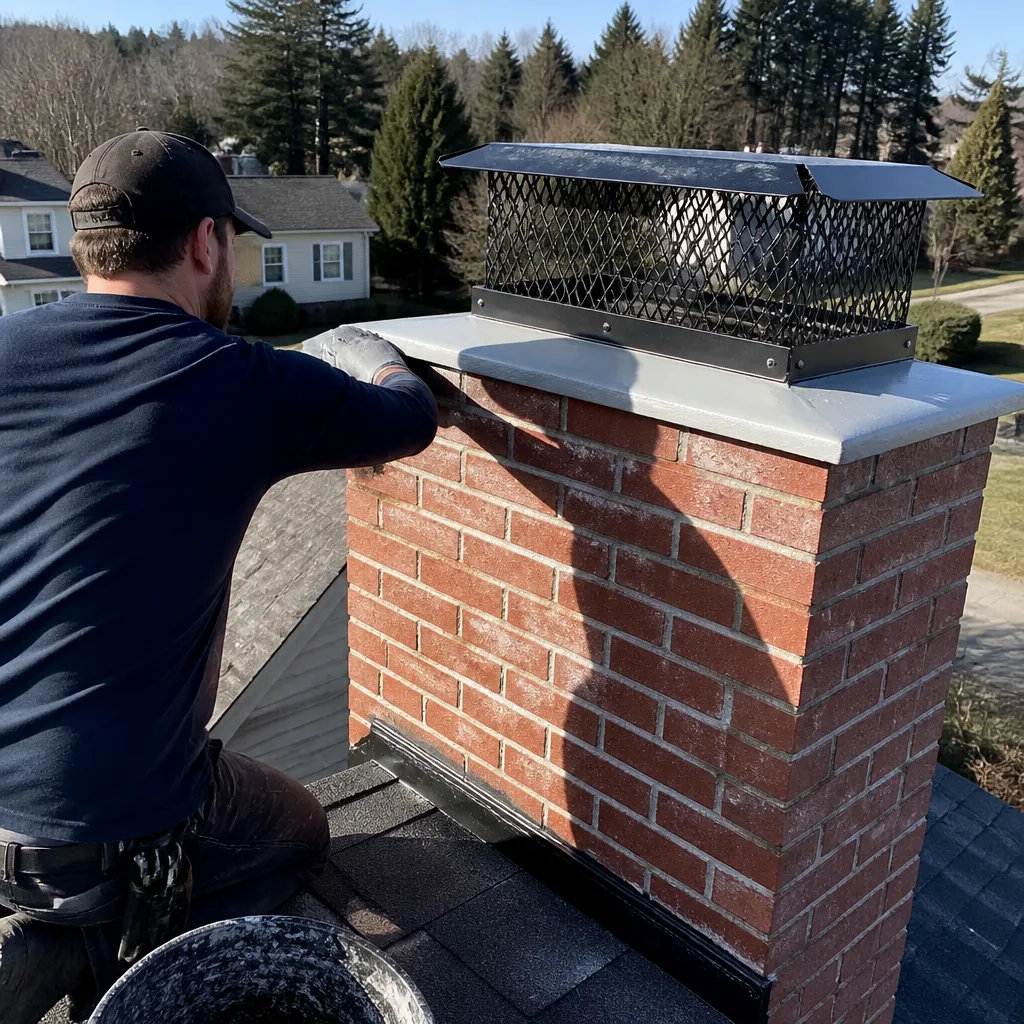 After
After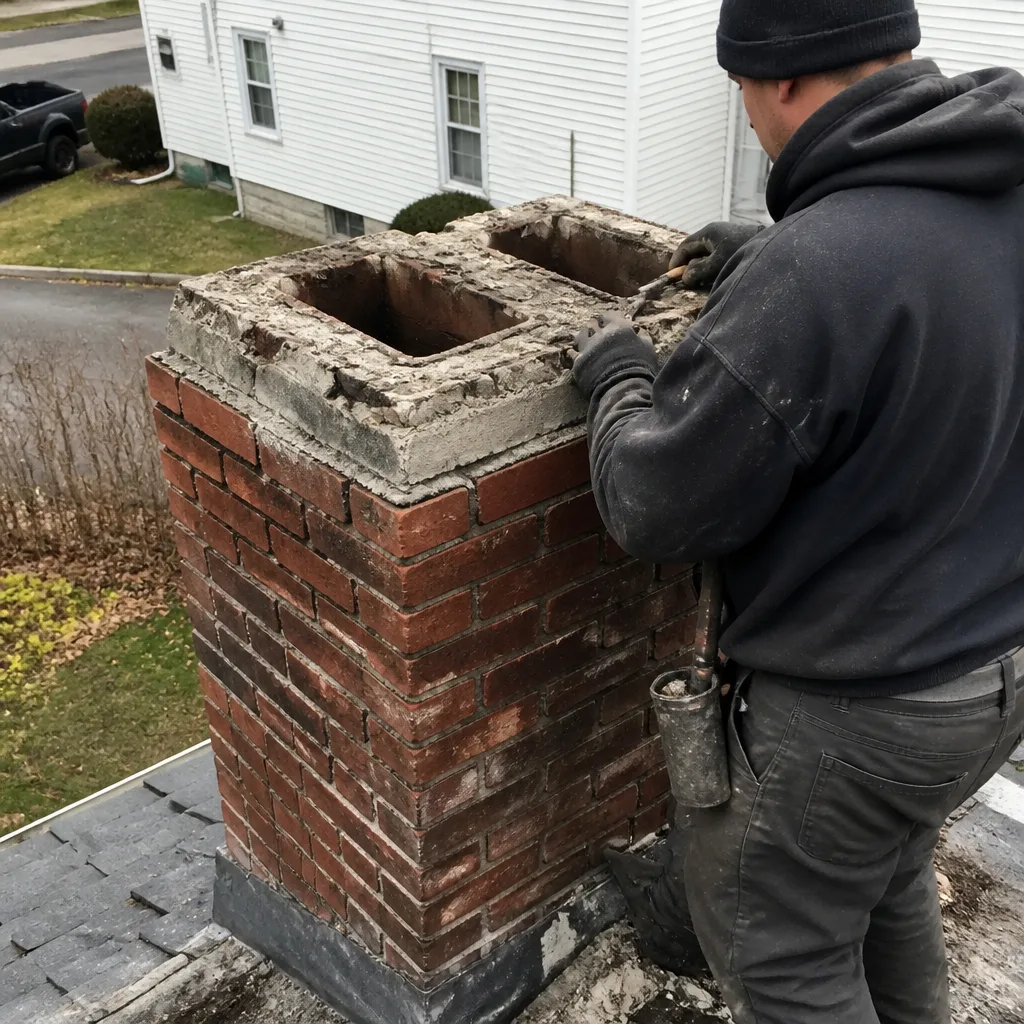 Before
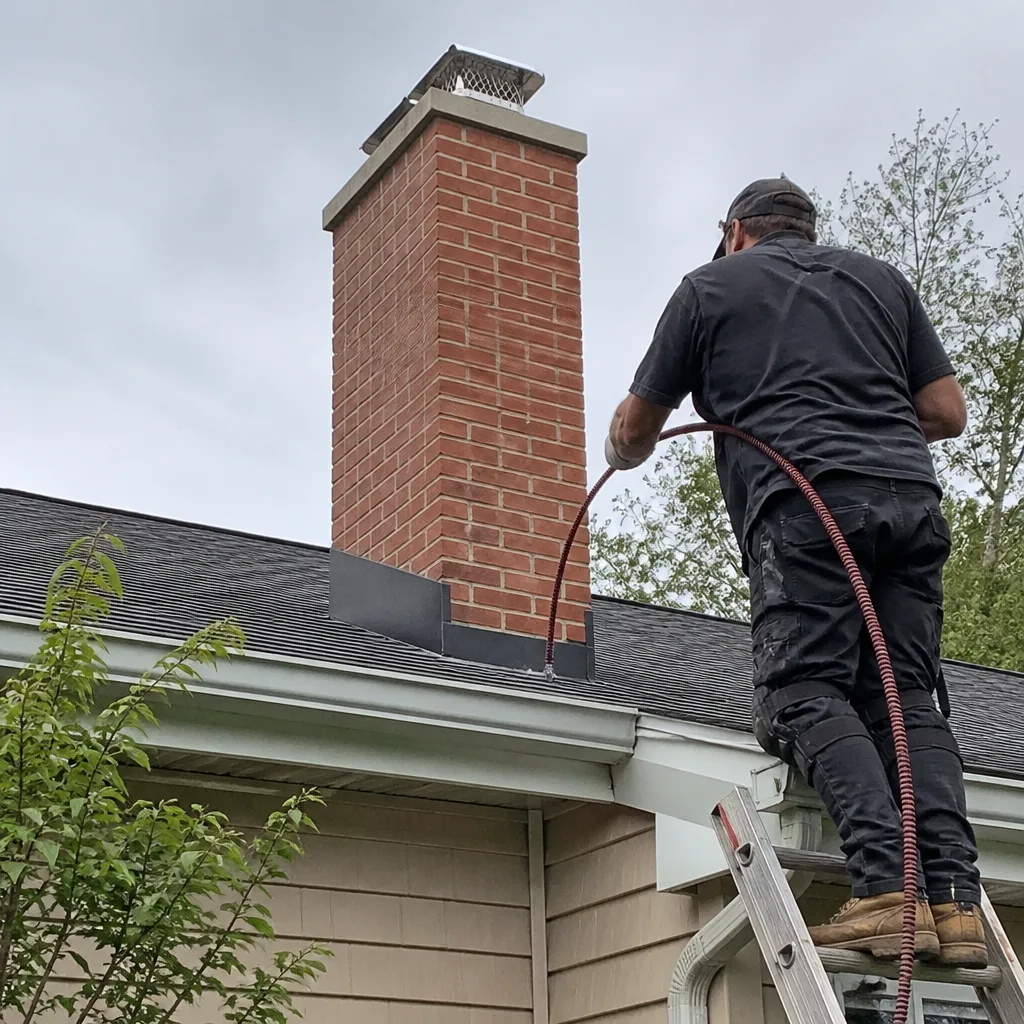 After
AfterDIY vs Professional Chimney Cleaning: The Worcester Homeowner’s Decision Guide
A $40 chimney brush and a Saturday afternoon can remove Stage 1 creosote from a straight flue. But the crack in the tile at 14 feet - the one our camera found last March on a Pleasant Street colonial - isn’t visible from either end with a flashlight. The DIY cleaning was completed successfully. The crack is still there. In Worcester, where heating degree days outpace most of Massachusetts and chimneys work overtime from October through April, the question isn’t whether you can clean your own chimney. It’s whether cleaning without inspecting leaves you worse off than doing nothing at all. This guide - along with our more guides & resources - maps what a careful homeowner can actually accomplish, what requires professional tools and training, and the specific Massachusetts conditions that change the math.
Quick Answer
Most Worcester homeowners can safely remove light, powdery creosote from a straight, short flue with consumer-grade brushes. But professional cleaning includes an NFPA 211 Level 2 camera inspection that identifies cracked flue liners, deteriorated mortar joints, and hidden obstructions - defects that cause chimney fires and carbon monoxide intrusion regardless of how clean the flue looks. The decision hinges on whether you can assess structural integrity, not just surface deposits.
Table of Contents
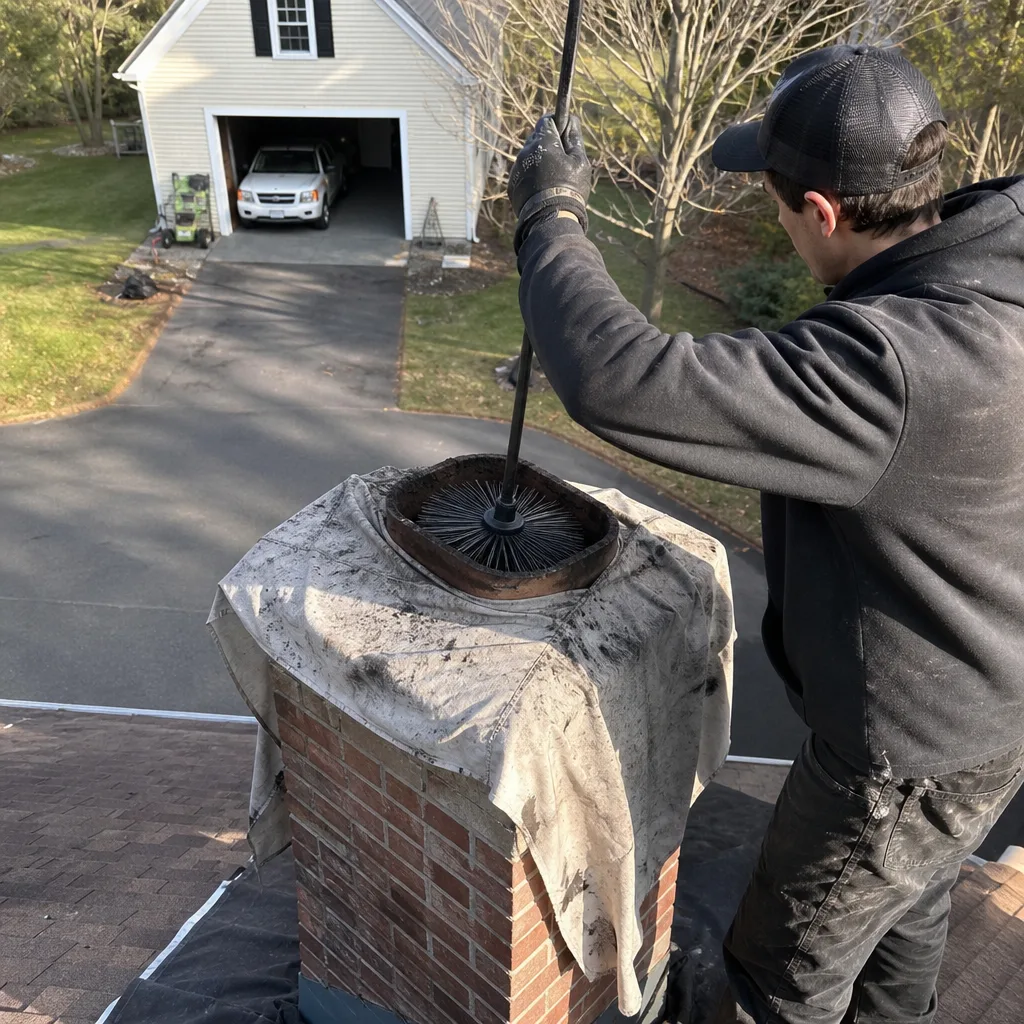
- What Homeowners Can Actually Do Safely
- The Diagnostic Gap: What DIY Cleaning Cannot See
- Tools, Costs, and the Hidden Economics of DIY
- Massachusetts Code and Insurance Considerations
- The Worcester Climate Factor: Why Local Conditions Matter
- The Hybrid Approach: Maintenance Between Professional Visits
- Common Mistakes to Avoid
- When to Call a Professional
- Frequently Asked Questions
 Before
 After
AfterWhat Homeowners Can Actually Do Safely
Let’s be direct about capability. A methodical homeowner with good physical mobility and a single-story or two-story home with a straight flue can accomplish specific, limited tasks without creating new hazards.
What is genuinely within reach:
- Removing Stage 1 creosote - the light, sooty, brushable deposit - from a straight masonry or metal flue using a poly or wire brush on extension rods
- Inspecting the firebox for visible cracks, missing mortar, or damaged firebrick
- Checking the damper for proper operation and corrosion
- Removing debris from the firebox and ash dump
- Verifying that the chimney cap is present, secure, and free of visible damage
The critical qualifier is “straight flue.” In Worcester’s housing stock - heavy on 1920s triple-deckers, postwar capes, and Victorian-era homes in neighborhoods like Chimney Cleaning & Sweep in Worcester - flues often offset to avoid floor joists, incorporate smoke shelves, or vent multiple appliances. These configurations make brush navigation difficult and deposit removal incomplete. A brush that misses a ledge of glazed creosote leaves a fuel load that ignites at 451°F.
The safety boundary is firm: if your chimney has ever had a chimney fire, if you burn more than two cords of wood per season, if you see shiny black or tar-like deposits, or if your flue has any offset or bend, consumer equipment is insufficient. Stage 3 creosote - the hardened, glazed, or tar-like accumulation - requires rotary mechanical cleaning with chains or whips at controlled speed. Done incorrectly, this damages clay tile liners or dislodges sections of deteriorated flue. We’ve replaced liners in Worcester homes where aggressive DIY cleaning cracked tiles that were already compromised.
Physical risk matters too. Roof work on Worcester’s pitched roofs, especially with the freeze-thaw cycles that create ice patches on north-facing slopes from November through March, is genuinely dangerous. Falls from roof height are the leading cause of DIY chimney maintenance injuries nationally. If your chimney cap or crown needs inspection from above, the risk calculus shifts sharply toward professional service.
The Diagnostic Gap: What DIY Cleaning Cannot See
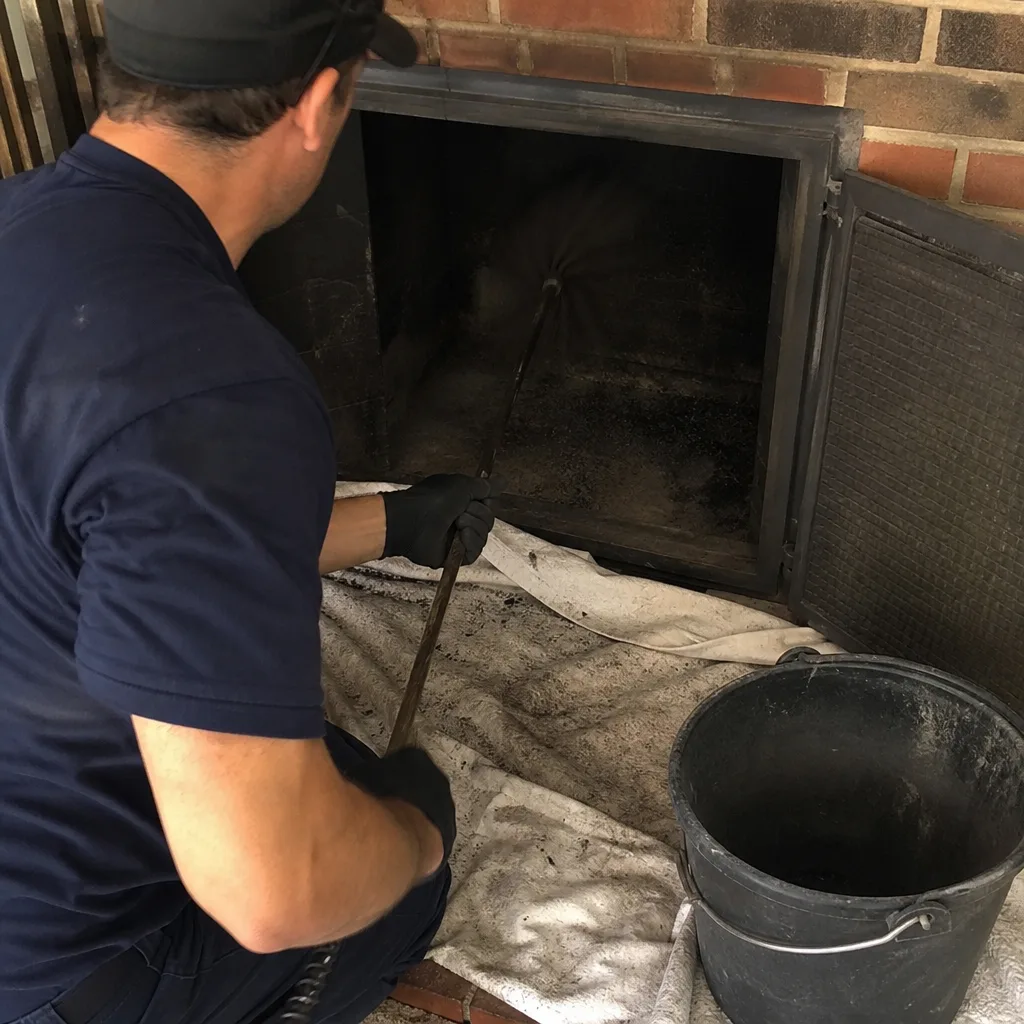
This is the variable most guides avoid naming. Cleaning addresses deposits. Inspection addresses integrity. They are not the same task, and in Worcester’s older housing stock, integrity failures are more common than deposit problems.
Here’s what a flashlight inspection from top or bottom cannot reveal:
- Hairline cracks in clay flue tiles - visible only under camera magnification with proper lighting; these allow combustion gases to penetrate the chimney wall and enter living spaces
- Deteriorated mortar joints between flue tiles - the cementitious lining that seals the flue system fails progressively; gaps at joints are invisible from either opening
- Spalling or flaking of the flue liner surface - indicates freeze-thaw damage or acid corrosion from condensing flue gases
- Obstructions from collapsed liner sections, animal nests, or construction debris - partial blockages create drafting problems and carbon monoxide backdraft
- Correct sizing and configuration for the appliance being vented - a flue that is too large or too small for the insert or stove creates chronic creosote formation or spillage
Our Level Two Chimney Worcester home practice is built on this distinction. Since 2009, we’ve performed more than 38,000 chimney inspections and cleanings, every one with a camera scan down the flue and a documented photo record. Clause 4 of the Haven Standard requires this photo record on every job - not as an upsell, but as the baseline documentation that lets a homeowner see what we see.
The failure modes of these hidden defects carry real costs. A cracked flue liner that goes unidentified allows carbon monoxide to migrate through chimney walls. In a Worcester triple-decker with balloon framing, that migration can affect multiple units. A chimney fire that starts in a compromised flue can require full liner replacement, smoke chamber parging, and exterior masonry repair - costs that run from $3,500 to $12,000 depending on flue height and access. The $200-$350 professional cleaning and inspection that would have identified the crack looks different in that light.
Last heating season, we documented a case on Providence Street where a homeowner had cleaned their flue diligently for three years. The flue was visibly clean. Our camera found a displaced tile section at 11 feet that had created a gap allowing exhaust to vent into the wall cavity for multiple seasons. The thermal imaging we performed as follow-up showed elevated temperatures in the adjacent bedroom wall. The cleaning was competent. The inspection gap was costly.
Tools, Costs, and the Hidden Economics of DIY
The upfront price comparison favors DIY superficially. A basic chimney brush and rod set runs $30-$80. A shop vacuum with fine particle filtration adds $150-$300 if you don’t own one. Protective equipment - respirator rated for fine particulate, goggles, drop cloths - adds another $50-$100. For a straight flue, first-year tool acquisition runs $230-$480.
Professional chimney cleaning and inspection in the Worcester market ranges from $200-$350 for a standard masonry fireplace, with wood stove inserts and multi-flue systems running higher. The price includes the NFPA 211 Level 2 inspection with camera documentation - the diagnostic component that has no DIY equivalent.
Cost comparison table:
| Factor | DIY Approach | Professional Service |
|---|---|---|
| First-year outlay | $230-$480 (tools) | $200-$350 (service) |
| Annual recurring cost | $0-$50 (brush replacement, consumables) | $200-$350 |
| Camera inspection included | No | Yes - standard |
| Written documentation for insurance | No | Yes - photo record, written scope |
| Liability if defect missed | Homeowner bears full risk | Professional E&O coverage; 365-Day Done Right Promise |
| Time investment | 4-8 hours (learning + execution) | 90 minutes (scheduled appointment) |
The hidden economics emerge in probability, not just price. Worcester’s housing stock skews older. In our experience, roughly 35% of first-time inspections in homes built before 1960 reveal conditions that require repair before safe use - cracked liners, deteriorated crowns, missing caps, or improper clearances. A homeowner who cleans annually without inspecting has a one-in-three chance of operating a compromised system each heating season. When that compromise results in a chimney fire, structural damage, or CO incident, the deductible alone ($1,000-$2,500 on most Massachusetts homeowner policies) exceeds years of professional service. Some insurers now require documented professional inspection for wood-burning appliance coverage; DIY cleaning does not satisfy this requirement.
Tool quality matters too. Consumer brushes from big-box retailers often use lower-grade wire that fatigues quickly, or poly bristles too stiff for metal flues and too soft for glazed creosote. Professional-grade equipment from suppliers like Olympia Chimney and Copperfield - the brands we source through Haven’s buying network - uses calibrated bristle tension and rod flexibility designed for specific flue materials. The $40 brush that seems adequate often isn’t, and the homeowner has no framework to know when it’s failing.
Massachusetts Code and Insurance Considerations
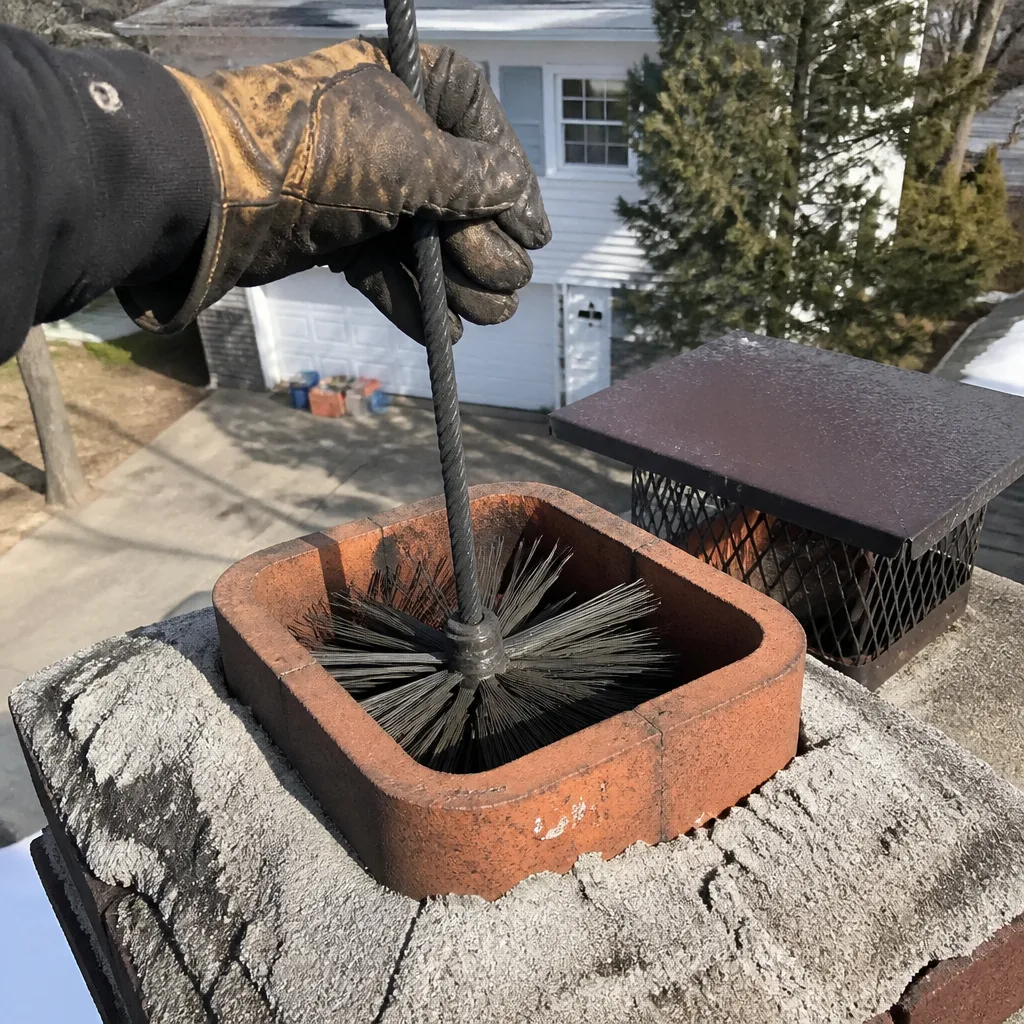
Massachusetts building code, derived from the International Residential Code with state amendments, contains specific provisions that affect DIY chimney maintenance decisions. The relevant standard is NFPA 211, adopted by reference in 527 CMR 30.00, which governs chimney and venting system installation and maintenance.
Key regulatory points:
- Chimney liners must be “continuous, gas-tight, and properly sized for the appliance served” - a condition verifiable only by internal inspection
- Any alteration to a chimney or venting system requires compliance with current code; DIY repairs that modify liner configuration, cap installation, or crown slope may trigger permit requirements
- Wood-burning appliances in Massachusetts must meet EPA certification standards; modifications to venting systems can void appliance certification and insurance coverage
Insurance exposure is the sharper edge. Massachusetts homeowner policies increasingly include wood-burning appliance endorsements with inspection requirements. After chimney fire incidents, insurers investigate maintenance history. A documented professional inspection with photo record - the standard we apply under Haven Standard Clause 4 - satisfies underwriting requirements. A homeowner’s verbal assertion that “I clean it every year” does not. In claim disputes, the absence of documentation shifts burden to the policyholder.
We provide written price, written scope, and written warranty before any work starts - Haven Standard Clause 1, “Have it in writing.” This documentation serves as evidence of professional maintenance if questions arise. DIY maintenance generates no comparable record.
For Worcester homeowners in historic districts - like those near Institute Park or in the Main South area with protected architectural inventory - exterior chimney modifications may also trigger local historic commission review. Professional contractors navigate these requirements routinely; DIY work that alters visible chimney elements can result in compliance orders.
The Worcester Climate Factor: Why Local Conditions Matter
Worcester’s position in central Massachusetts creates chimney conditions that differ materially from coastal or southern New England markets. Understanding these local factors changes maintenance decisions.
Freeze-thaw cycling: Worcester averages 150+ freeze-thaw cycles annually. Water enters masonry through crown cracks, deteriorated mortar joints, or porous brick. Each freeze expands the water volume by 9%. The resulting spalling - surface flaking and deeper fracturing - accelerates liner exposure and structural compromise. A chimney that looks sound in October can show significant deterioration by April. Camera inspection catches this progression; visual inspection from the firebox does not.
Heating degree days: Worcester accumulates approximately 6,500 heating degree days annually, among the highest in Massachusetts. Longer heating seasons mean more combustion cycles, more condensate production in flue gases, and more rapid creosote accumulation - especially in systems that are oversized for the appliance or operated at low burn rates for extended periods. The “clean it once a year” rule of thumb, adequate in milder climates, often understates Worcester requirements for heavy wood burners; see our Seasonal Chimney Cleaning Care for Worcester: Year-Round Homeowner’s Guide for a climate-adjusted schedule.
Wood supply and quality: Worcester’s urban and suburban woodlots produce abundant firewood, but seasoning practices vary. Wood burned at 20% moisture content or higher produces significantly more creosote than properly seasoned material. In neighborhoods like Tatnuck and Greendale, where homeowners source from backyard trees or local cordwood sellers with inconsistent drying practices, creosote accumulation rates can double. Professional inspection identifies the accumulation pattern and burn practice issues; DIY cleaning only addresses the symptom.
Wind exposure and drafting: Worcester’s elevation and topographic position create persistent northwest winds that affect chimney draft performance. Poor draft from wind pressure, combined with marginal flue temperatures, produces the condensing conditions that create glazed creosote. A homeowner cleaning surface deposits may miss the draft problem causing them.
These factors don’t make DIY cleaning impossible. They make DIY assessment unreliable. The local conditions that accelerate deterioration and accumulation are precisely the conditions that require diagnostic capability beyond visual inspection.
The Hybrid Approach: Maintenance Between Professional Visits
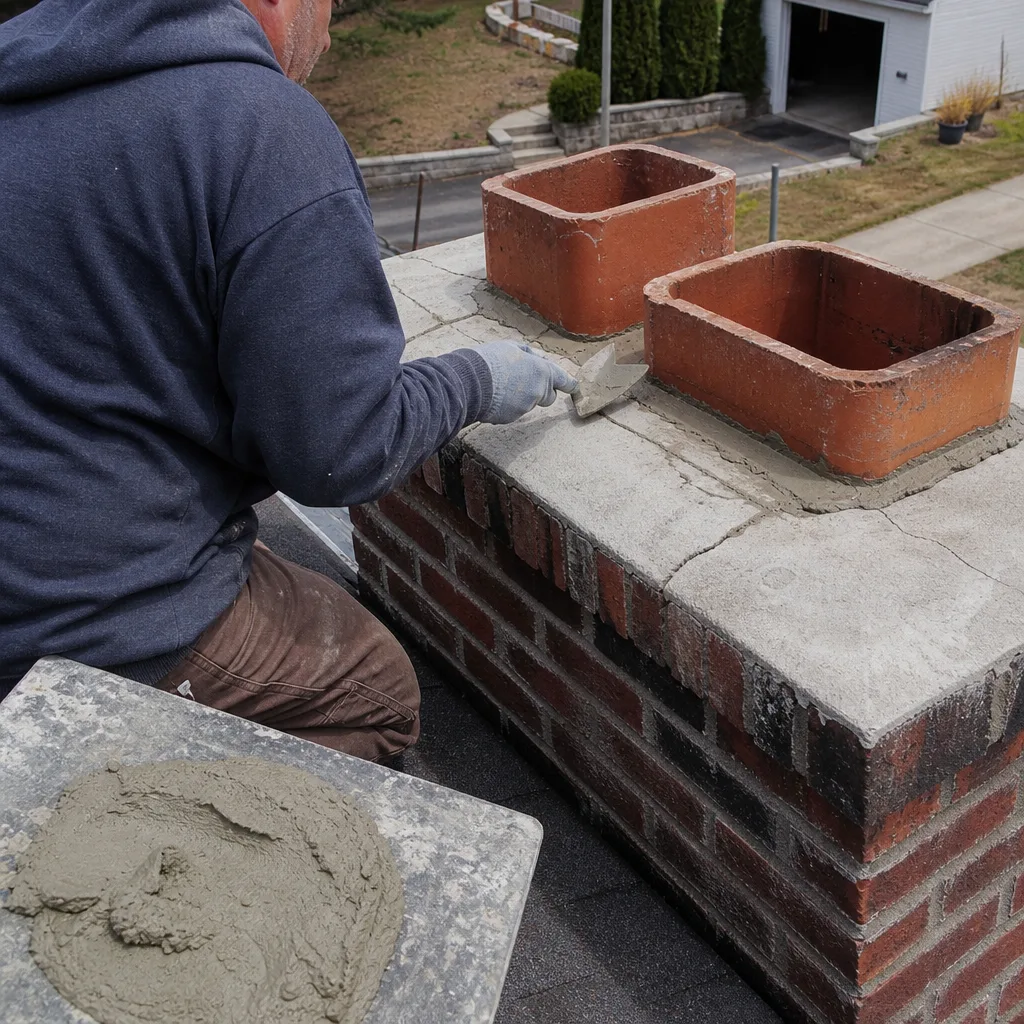
There is a middle path that leverages homeowner capability without creating the inspection gap. We recommend this approach for Worcester homeowners who want active involvement in their chimney maintenance.
- Annual professional cleaning and Level 2 inspection - non-negotiable baseline; schedule in late summer or early fall before heating season demand peaks
- Monthly firebox and ash management - remove ash to appropriate depth (1-2 inches for coal bed insulation in wood stoves; complete removal for fireplaces), inspect firebrick for new cracks, verify damper operation
- Quarterly exterior visual check - from ground level or a secure ladder at gutter height, check for new crown cracks, missing or damaged cap, mortar joint deterioration, or vegetation growth
- Mid-season creosote check - after 30+ fires, use a flashlight to inspect the flue from below for visible accumulation; if deposits exceed 1/8 inch, schedule additional service rather than attempting removal
- Documentation of all observations - dated photos of any changes, maintained with home records; provides baseline for professional evaluation and supports insurance documentation
This hybrid model keeps the homeowner engaged and observant without substituting amateur assessment for professional diagnosis. The monthly and quarterly tasks extend system life and catch emerging problems early. The annual professional visit provides the camera inspection, written documentation, and repair recommendations that protect safety and property value.
For homeowners with inserts or wood stoves, the hybrid approach includes additional steps: gasket inspection, baffle cleaning per manufacturer specification, and catalyst condition checks where applicable. These tasks are within competent homeowner reach and are specified in appliance manuals. They do not replace professional inspection of the venting system.
Common Mistakes to Avoid
- Assuming a clean flue is a sound flue. Deposits and integrity are separate systems. We’ve found structurally compromised chimneys with visually clean flues in Worcester homes on Park Avenue and June Street where years of diligent brushing masked progressive liner failure.
- Using a household vacuum without HEPA filtration. Fine creosote particulate is carcinogenic. Standard shop vacuums exhaust ultrafine particles back into living space. Professional equipment uses HEPA containment and exterior venting.
- Cleaning from the top down without roof safety equipment. Worcester’s freeze-thaw cycle creates invisible ice on roof surfaces. A fall from a two-story roof carries high probability of serious injury. If roof access is required, use a professional with proper harness and anchor systems.
- Burning treated lumber, painted wood, or household trash. These materials deposit corrosive residues and toxic compounds that accelerate liner deterioration and create hazardous deposits. The practice is common in urban Worcester neighborhoods where scrap wood is abundant; it is never acceptable.
- Ignoring the smoke chamber. The area above the damper and below the flue liner - the smoke chamber - accumulates creosote and is inaccessible to standard brushes. In Worcester’s older homes with corbeled brick smoke chambers, this area is often the most heavily deposited and most difficult to clean. Professional service includes smoke chamber access and cleaning.
- Delaying professional service after a chimney fire. Even a small chimney fire (often audible as a rumbling or popping, or visible as dense smoke from the cap) causes thermal shock damage to liners and masonry. A homeowner who cleans after a fire without inspection may operate a system with hidden structural compromise. Immediate professional evaluation is required.
When to Call a Professional
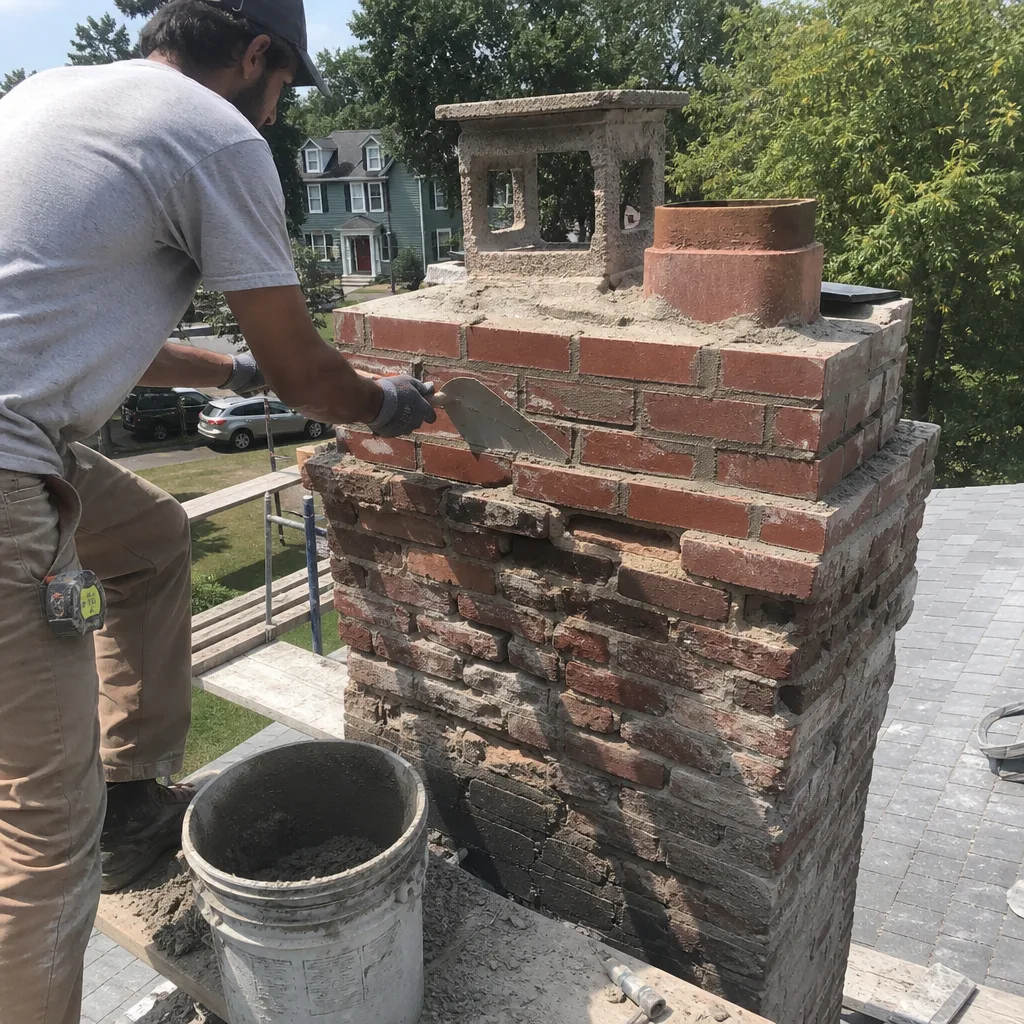
Specific conditions require professional service without DIY attempt:
- Any suspected chimney fire, regardless of apparent severity
- Visible cracks in the firebox, hearth, or exterior masonry
- Smoke spillage into the room during normal operation
- Strong odors from the fireplace when not in use, especially in damp weather
- White staining (efflorescence) on exterior chimney surfaces, indicating moisture intrusion
- More than two years since last professional inspection, regardless of cleaning history
- Installation of a new appliance, insert, or liner system
- Property transfer or estate settlement requiring documented chimney condition
Chimney Repair in Worcester from Level Two Chimney Worcester includes NFPA 211 Level 2 camera inspection, written price before work starts, and documented photo record on every visit. We offer free estimates throughout Worcester - call (978) 307-8288 to schedule. Our 365-Day Done Right Promise applies to all work: if it’s not done right, we make it right. We also provide free second opinions on any competitor’s written estimate; bring us their quote for comparison.
Frequently Asked Questions
Standard masonry fireplace cleaning and inspection in Worcester runs $200-$350, with wood stove inserts and multi-flue systems typically $275-$450 - detailed in our Chimney Cleaning Cost Breakdown: The Worcester Homeowner’s Reference for 2026. This includes the NFPA 211 Level 2 camera inspection and documented photo record. We deliver a written price before any work starts - no exceptions. Call (978) 307-8288 for an exact quote; estimates are free.
The NFPA 211 standard recommends annual inspection for all chimney systems, with cleaning frequency determined by inspection findings. In Worcester’s climate with 6,500+ heating degree days, heavy wood burners (more than two cords per season) often require cleaning every burning season. Light users of gas or oil systems may extend to every two years if inspection confirms minimal accumulation. The determining factor is what the camera shows, not the calendar.
This is the right question to ask. At Level Two Chimney Worcester, no liner replacement is recommended without camera evidence you can see for yourself. Clause 4 of the Haven Standard requires a photo record on every job - we show you the crack, the spalling, or the missing mortar joint before quoting repair. We also offer free second opinions on any competitor’s written estimate. If a company recommends major work without documentation you can examine, get another opinion.
Accumulated creosote ignites at 451°F - a temperature reached in normal operation. The resulting chimney fire can crack liners, damage masonry, and spread to structural elements. Carbon monoxide from incomplete combustion can leak through compromised flue walls, especially in Worcester’s older homes with balloon framing. Insurance may deny claims for chimney-related damage without documented professional maintenance. The risk is real, specific, and preventable.
Yes, though it’s rarely cost-effective. Our inspection fee for a homeowner-cleaned system is the same as our cleaning and inspection package, and we typically find areas the DIY cleaning missed - smoke chamber deposits, offset ledges, or incomplete removal near the flue throat. If you prefer this approach, schedule the inspection before heating season; we’ll assess the cleaning quality and complete any needed touch-up with written scope and price.
Massachusetts does not mandate professional cleaning by statute, but building code requires chimney systems to be “maintained in a safe condition.” Insurance policies increasingly require documented professional inspection for wood-burning coverage. In rental properties, Worcester’s housing code enforcement follows state sanitary code provisions that can cite unmaintained chimneys as hazardous conditions. For owner-occupied single-family homes, the practical requirement is insurance-driven rather than regulatory.
A Level 1 inspection is visual - accessible areas only, no tools, no camera. A Level 2 inspection, which we perform on every visit, includes video scanning of the flue interior, inspection of accessible attics and crawl spaces, and evaluation of clearances and chimney connection. Level 2 is required upon property sale, after chimney fire or seismic event, or when any change is made to the system. The camera component is what finds the defects invisible from either end.
Yes, with qualification. Properly seasoned pine burns hotter and faster than hardwood, producing less creosote per pound but more flue gas volume. The key is moisture content below 20%, not species. In Worcester’s market, softwood is often sold greener than hardwood. Burn only well-seasoned material, maintain hot fires with adequate air supply, and inspect more frequently if softwood is your primary fuel. The “pine causes creosote” myth persists; unseasoned wood of any species is the actual culprit.
The Bottom Line
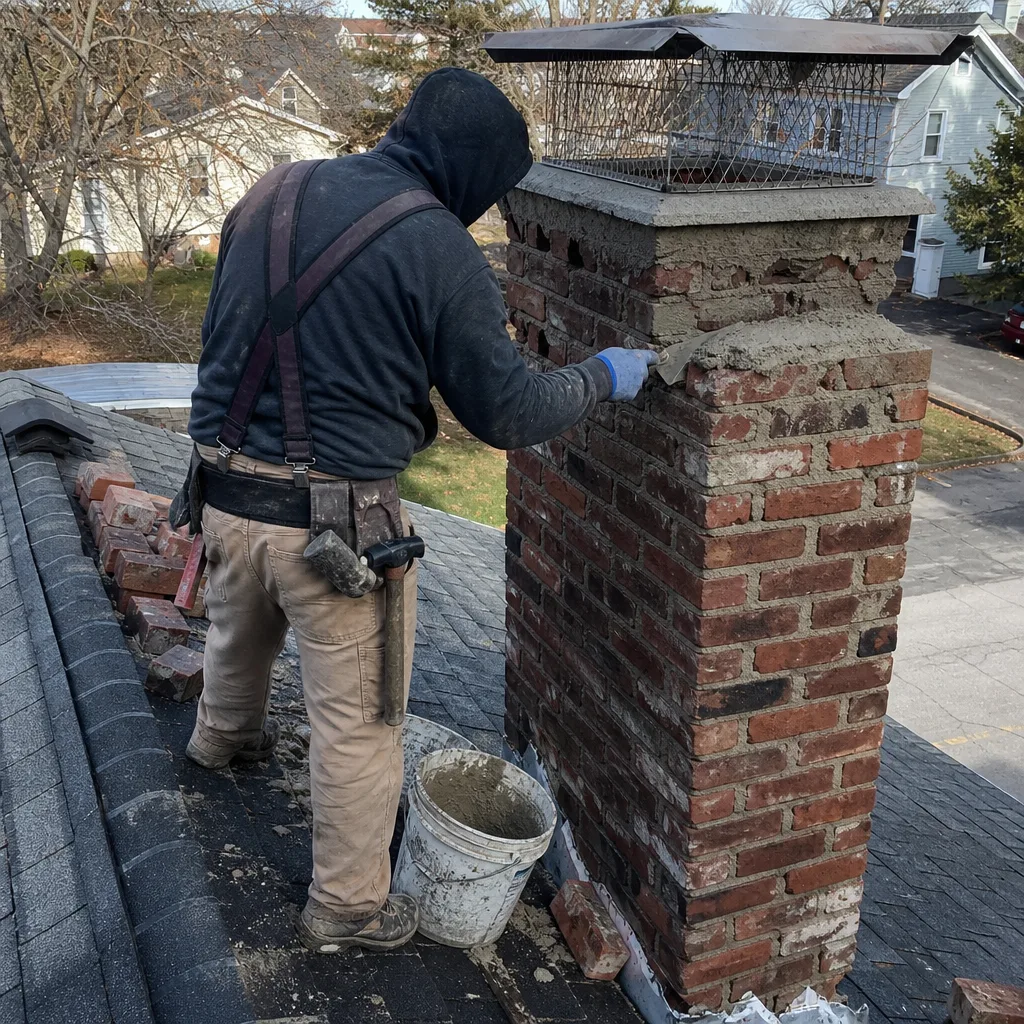
The DIY vs. professional question resolves to a single test: can you verify that your chimney is structurally sound, not just visibly clean? For Worcester homeowners, the combination of older housing stock, severe heating seasons, and freeze-thaw masonry stress makes that verification essential. A $40 brush removes surface creosote. It does not find the crack at 14 feet. Annual professional service with camera inspection - the standard we’ve applied since 2009 - provides the documentation, diagnosis, and repair planning that protects your home and satisfies insurance requirements. The hybrid approach keeps you engaged between visits without creating the inspection gap that turns small problems into expensive emergencies.
Ready for a documented inspection? Level Two Chimney Worcester serves homeowners throughout Worcester with NFPA 211 Level 2 camera inspections, written upfront pricing, and the 365-Day Done Right Promise. Call (978) 307-8288 for a free estimate. Our live phone support is available 24 hours a day, 7 days a week - you’ll speak to a person, not a voicemail system. We also welcome your competitor’s written estimate for a free second opinion.
Written by Corrine Halstead, Owner at Level Two Chimney Worcester, serving Worcester since 2009.